
At some point in every bathroom project, picking up the right bathtub size is considered one of the most important decisions. If you get it wrong by even a few inches, that means a faulty layout, extra replumbing costs, or a tub that simply doesn’t fit through the door. Whether the bathtub is for a family home or a luxury hotel, this bathtub size guide covers everything you need to know about standard bathtub dimensions, comparisons, layout tips, and the mistakes to avoid.
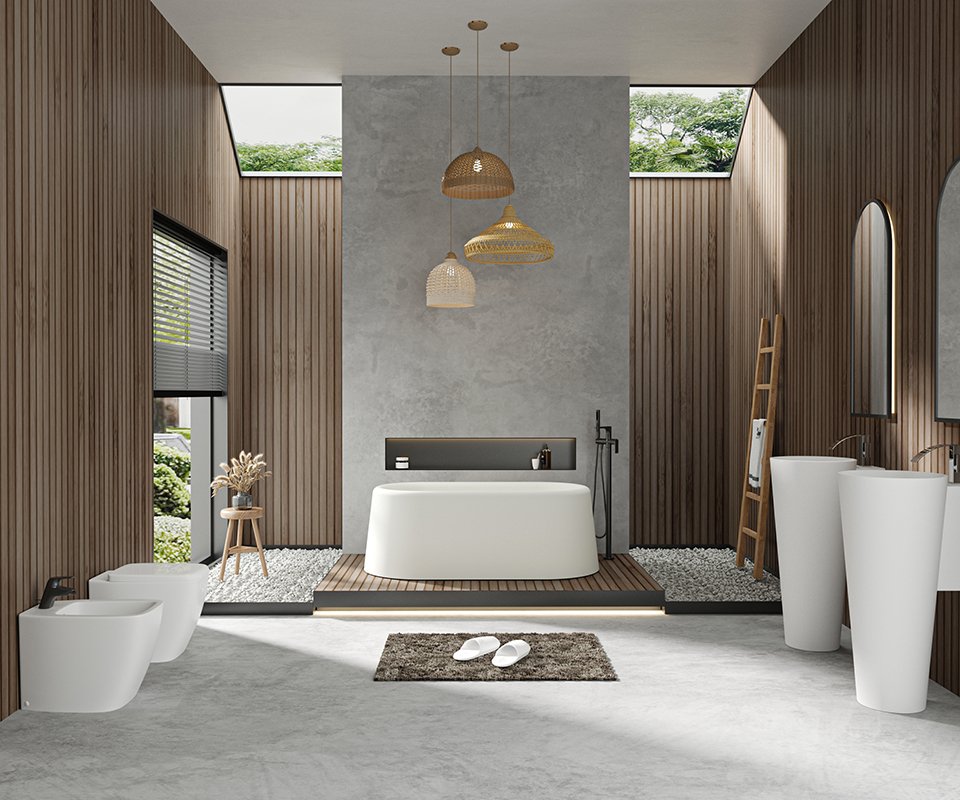
What Is the Standard Bathtub Size?
The most common standard bathtub size is 60 inches long × 30 inches wide × 14–16 inches deep (approximately 152 × 76 × 36–41 cm). This size fits most residential bathrooms and remains the industry standard for alcove-style tubs. But the right size for your bathroom depends on the type of bathtub, the size of the bathroom, and the type of property, whether residential or a commercial property like a hotel.
Standard Bathtub Dimensions and Size Chart by Type
Check out the bathtub size guide in the table below for different bathtubs –
| Bathtub Type | Length | Width | Depth | Best for |
| Alcove (Standard) | 55–60 in | 30–32 in | 14–16 in | Small- to mid-size bathrooms |
| Freestanding | 55–72 in | 27–40 in | 20–26 in | Spacious bathrooms, hotels |
| Corner | 48–60 in | 48–60 in | 18–22 in | Corner spaces, luxury suites |
| Soaking Tub | 60–72 in | 30–42 in | 18–28 in | Spa-style, relaxation focus |
| Clawfoot | 54–72 in | 30–32 in | 22–28 in | Classic, vintage aesthetics |
| Drop-In / Undermount | 60–72 in | 30–40 in | 15–22 in | Built-in platform installs |
| Walk-In | 52–60 in | 28–32 in | 38–42 in | Elderly users, accessibility |
| Transparent | 55-72 in | 27-40 in | 20-26 in | Boutique hotels, high-end villas |
Note: The chart above covers all major bathtub types available in the market. KKR specializes in solid surface and acrylic bathtubs, including freestanding, clawfoot, alcove, soaking, and transparent styles. Drop-in and walk-in types are included here for market completeness. For non-standard configurations or custom dimensions, KKR’s team can customize according to the project specifications.
Most Popular Bathtub Types
Alcove Bathtubs
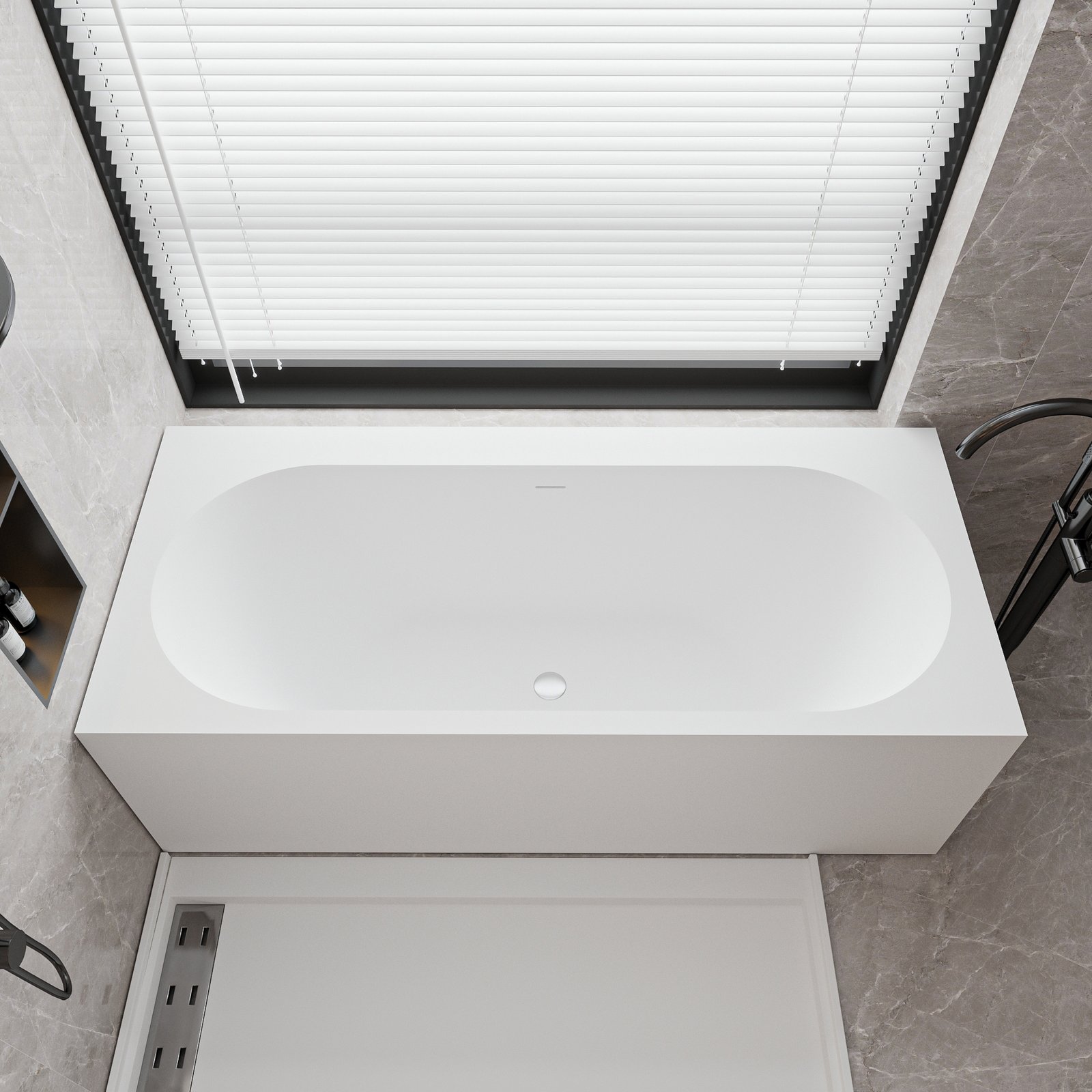
Its standard size is 60 × 30 × 14 inches. These types of bathtubs are built into a three-wall enclosure and are the most space-efficient option. So it is usually the preferred choice for most homes. They’re commonly paired with an overhead shower. KKR produces alcove tubs in both solid surface and acrylic.
Freestanding Bathtubs
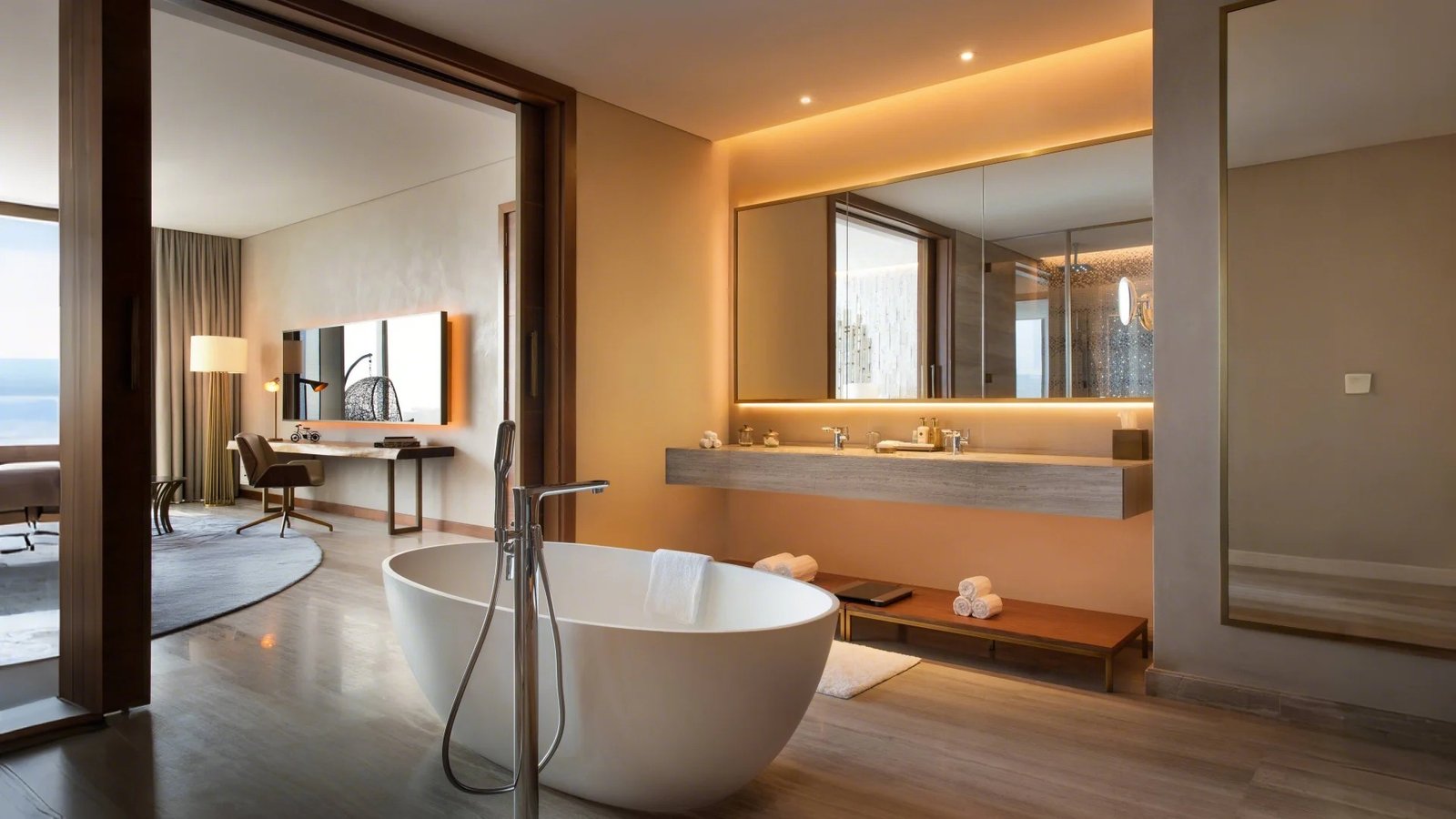
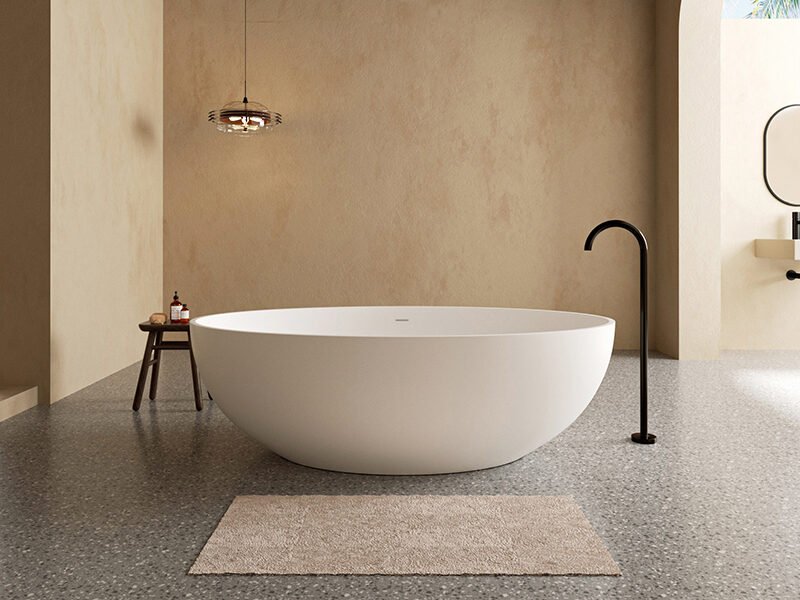
Freestanding bathtubs stand independently with no surrounding walls. They are popular and stylish, hence a popular choice for hotel bathrooms and luxury homes. They need more floor space and require plumbing connections from the floor or ceiling. Its sizes usually range from 65 to 72 inches in length with a depth of 20 to 26 inches. KKR’s solid-surface freestanding range is one of its most popular product lines for hospitality projects.
Clawfoot Bathtubs
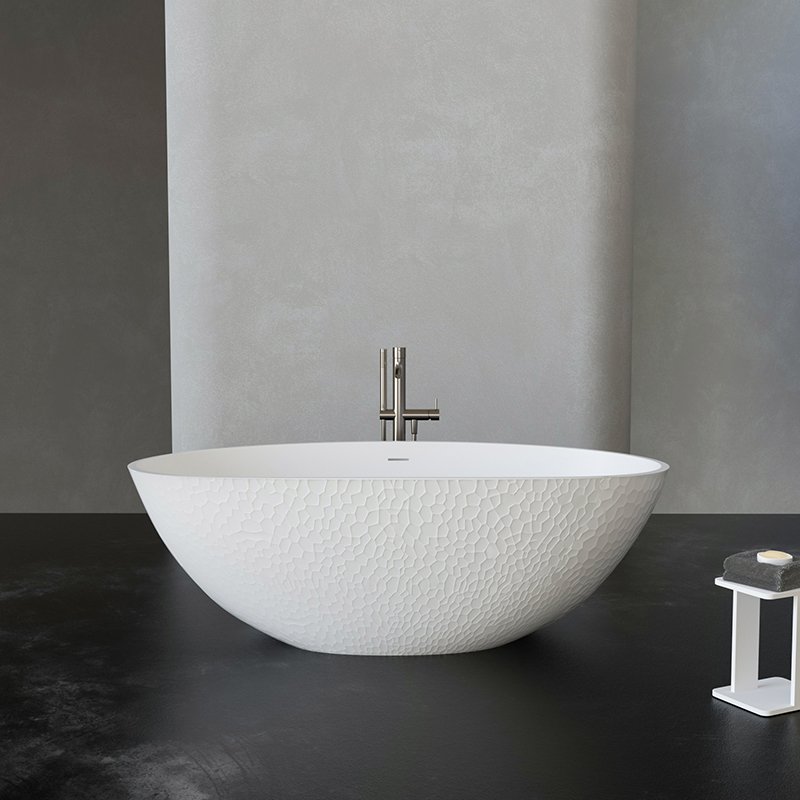
This type of bathtub brings a vintage aesthetic to any bathroom. It is supported by four decorative feet. They typically run 54–72 inches long with a depth of 22–28 inches. KKR manufactures clawfoot tubs in solid-surface materials, giving this traditional form a modern, premium finish.
.jpg)
Soaking Tubs
The defining feature of a soaking tub is depth, typically 18–28 inches, designed to fully submerge the bather’s body. They are longer, hold more water, and are far more common in spa and hotel settings. KKR offers soaking tub proportions across its freestanding bathtub range.
Transparent Bathtubs
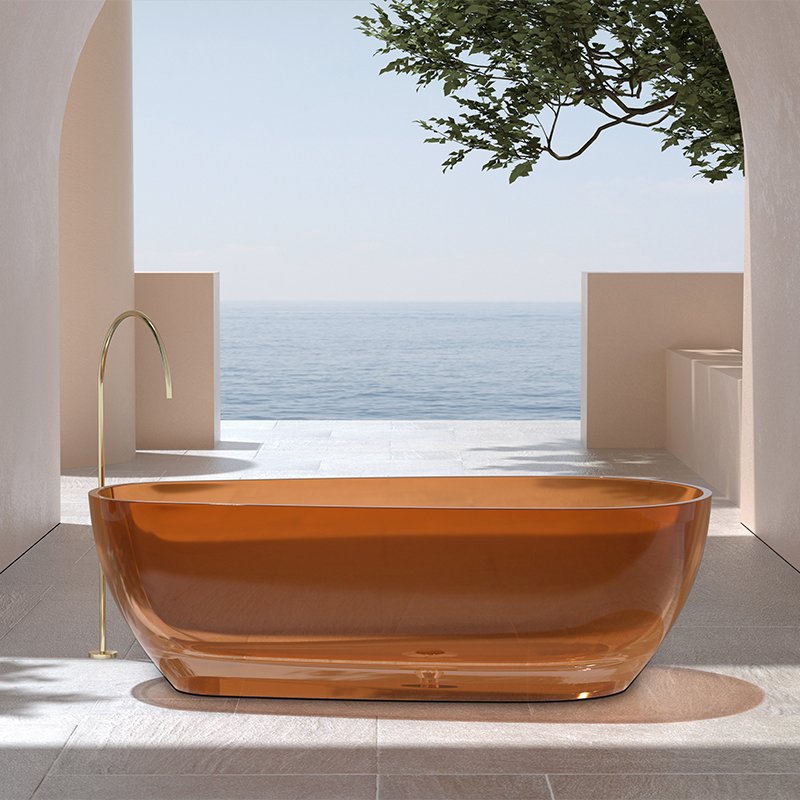
A distinctive option increasingly chosen by boutique hotels and high-end villas. Transparent tubs create a dramatic visual effect and pair well with open-plan bathroom layouts. KKR is one of the few manufacturers that produces transparent bathtubs as a standard product line.
Corner Bathtubs
Corner tubs fit into a corner, making clever use of an otherwise awkward space. They typically measure 48–60 inches on each side and are most commonly found in luxury suites and larger master bathrooms. While not part of KKR’s standard catalog, corner tubs can be produced as a custom project order.
Drop-In / Undermount Bathtubs
The bathtubs are installed into a built-in platform, with the edges finished neatly around the rim. They are commonly used in premium residential bathrooms and typically range from 60 to 72 inches in length.
Walk-In Bathtubs
Walk-in tubs feature a door on the side for easy entry, designed for elderly users or those with limited mobility. They are significantly deeper at 38–42 inches.
Residential vs. Hotel Projects: Key Differences
Bathtub sizing needs differ quite a bit between home installations and commercial hospitality projects.
| Factor | Residential | Hotel / Commercial |
| Priority | Space efficiency | Guest experience & aesthetics |
| Common Type | Alcove, drop-in | Freestanding, soaking |
| Typical Length | 55–60 inches | 65–72 inches |
| Depth preference | 14–16 inches | 20–28 inches |
| Material | Acrylic, fiberglass | Solid surface, stone resin |
| Customization | Rarely needed | Very common |
What Hotel Projects Actually Demand from a Manufacturer
Most people don’t realize how different a hotel bathroom supply is from a simple retail purchase. Based on real project experience across brands like Marriott, Hilton, Waldorf Astoria, W Hotels, St. Regis, Pullman, and Mandarin Oriental, hotel developers need far more than a good-looking product.
They require:
- Mass production consistency across hundreds of identical units
- Engineering-level customization for non-standard floor plans
- Strict durability standards for heavy daily use
- A single supplier who can coordinate basins, bathtubs, shower trays, wall panels, and accessories from one source, a true one-stop bathroom procurement solution
KKR, with 2,000+ completed global hotel projects, is built specifically for this level of procurement complexity.
Bathtub Layout Planning Tips
Choosing the right bathtub size on paper is only part of the process. What really matters is how it fits in your bathroom and connects to plumbing, doors, and other fixtures. If you’re working with an architect or interior designer, KKR gives design consultation support for projects at the planning stage.
Follow the steps below for the correct bathtub layout:
1. Measure your doorway before ordering: When installing the bathtub, it should physically pass through the bathroom door. A 60-inch freestanding tub needs a doorway of at least 30–32 inches of clear width. For large or unusual tubs, make sure there is a clear path from the entrance to the bathroom.
2. Follow minimum clearance rules: For alcove tubs, leave at least 6 inches of clear wall space at each end for caulking and fixture access. For freestanding tubs, there should be at least 18 inches of clear floor space on each open side. This allows access for cleaning and a natural circulation path around the tub.
3. Position plumbing before finalizing your tub choice: Freestanding tubs need floor or ceiling fixtures, while alcove tubs use wall faucets. Changing plumbing later is costly, so use this bathtub size guide to choose your tub type first and plan the plumbing accordingly.
4. Ensure the door opens fully, and there is enough space for easy movement: If the door opens into the bathtub area, it can cause problems. Check how the door opens before placing the tub, especially in small bathrooms.
5. Check floor load capacity for large soaking tubs: A filled freestanding tub is very heavy. It can weigh over 500 kg. Check your floor strength first. This is important in old or multi-story buildings. Ask an expert before choosing a large tub.
6. Plan lighting and ventilation in relation to the tub: If the bathtub is the centerpiece, plan lights, windows, and ventilation around its position from the start, not later. Getting the standard bathtub size right is not the only job, but how the tub sits in the overall space matters just as much.
Common Bathtub Sizing Mistakes
Even experienced contractors and designers run into these. Here’s what to watch for before you finalize your specification. Contractors and project owners, especially, should review this list before placing any order.
Mistake 1: Measuring the room but not the access route. You measure the bathroom and see the tub fits on paper, but when you try to bring it in, it doesn’t pass through the front door or fit around the stairs. Always measure the full delivery path, not just the bathroom itself.
Mistake 2: Choosing depth based on looks, not water volume. A 26-inch deep soaking tub looks good in a showroom. But it holds more water, takes longer to fill, and puts more load on your hot water system. In hotel projects, this affects energy costs as there are hundreds of rooms.
Mistake 3: Ordering an alcove-sized tub for a freestanding installation. Alcove tubs have unfinished sides, as they’re designed to sit against walls. Freestanding tubs are designed to be seen from all sides. So if you install a drop-in tub as a freestanding one, the rough, unfinished bottom and sides will be visible, and it won’t look good.
Mistake 4: Ignoring the rim height in relation to user comfort. The rim height determines how easy it is to step into the tub. Standard alcove tubs measure 14–16 inches, while freestanding tubs measure 20–24 inches. It works best for elderly users, villa projects, or accessibility-conscious designs.
Mistake 5: Specifying custom sizes without confirming lead times. If you order custom-sized tubs, they take extra time to make (an extra 2 to 4 weeks). For a hotel with 150 or more rooms, this delay can push the entire project timeline. So, before you finalize any custom tub size, always check with your manufacturer first on how long it will take.
Mistake 6: Mixing bathtub models across the same hotel floor. In hotel projects, try to use the same bathtub model across all rooms. If you use three different models on the same floor, you’ll need spare parts for all three, manage three different installation guides, and deal with maintenance issues for three different models. Keeping it uniform saves time, money, and hassle in the long run.
Conclusion
Choosing the right bathtub size comes down to three things: your available space, your project type, and your users’ needs. Standard bathtub dimensions, typically 60 × 30 × 14 inches, work well for most homes, but hotel and villa projects almost always benefit from custom sizing and premium materials. Freestanding solid-surface bathtubs in the 65–72 inch range remain the top choice for hospitality projects worldwide.
For solid surface and acrylic bathtubs built to exact project specifications, including freestanding, clawfoot, alcove, soaking, and transparent styles, explore the full range at kkrbath.com/bathtub. For villa projects or large-scale hotel procurement, get in touch with the KKR team directly.
FAQs
- What is the most common bathtub size for a standard bathroom?
The most widely used bathtub dimensions are 60 × 30 × 14–16 inches (152 × 76 × 36–41 cm). This is the default alcove tub size and fits the vast majority of homes without any structural changes.
- What bathtub size is best for a hotel room?
For hospitality projects, a freestanding soaking tub in the 65–72 inch length range with a depth of 20–24 inches delivers the best guest experience. Solid surface is the preferred material for hotels because of its premium look, heat retention, and durability.
- Can bathtubs be custom-made to non-standard sizes?
Yes. Manufacturers who specialize in solid surface products can produce bathtubs in virtually any dimension, custom length, width, depth, shape, and color. Lead times for custom orders are typically 2–4 weeks depending on complexity.
- What is the difference between a soaking tub and a standard bathtub?
The key difference is depth. A standard tub is 14–16 inches deep. A soaking tub is 18–28 inches deep, designed to fully submerge the bather’s body. Soaking tubs are longer, hold more water, and are far more common in spa and hotel settings.
- How much floor space does a freestanding bathtub need?
Plan for the tub’s footprint plus at least 18 inches of clear space on each open side. For a 65 × 30-inch freestanding tub, dedicate a bathroom section of roughly 8.5 × 5.5 feet to the tub area alone. Larger models need more.