ADA sink requirements define how sinks must be designed and installed to ensure accessibility. They are critical in commercial bathrooms to avoid compliance failures, safety risks, and costly rework.
Problems regarding ADA compliance seldom arise in initial designs. Problems arise in inspections or upon handover of the project once the space has been put into use. Slight adjustments made by installing a sink higher or restricting clearance can make the installation seem right, but fail during practical use. This leads to more time being taken to rectify such mistakes.
The requirements of the ADA sink are an understanding of design specifications that will affect the usage of the sink.
Conforming your sink installation to ADA regulations requires taking into consideration all the factors that make sure the sink can work practically.
What Are ADA Sink Requirements?
ADA sink requirements define how a sink must be designed and installed to ensure accessibility, safety, and ease of use for individuals with disabilities. These standards apply to commercial and public spaces where an ADA compliant sink is required to support inclusive use.
In practical terms, ADA bathroom sink requirements focus on how a user approaches and interacts with the sink. This includes specific dimensions and operational conditions that must work together as a system:
- ADA sink height requirements
- ADA sink clearance requirements
- Faucet and controls
- Installation conditions
Compliance depends on correct coordination between these elements. Meeting one requirement alone does not ensure usability. A sink only qualifies as ADA compliant when height, clearance, controls, and installation all function together as intended.
What ADA Sink Requirements Actually Govern
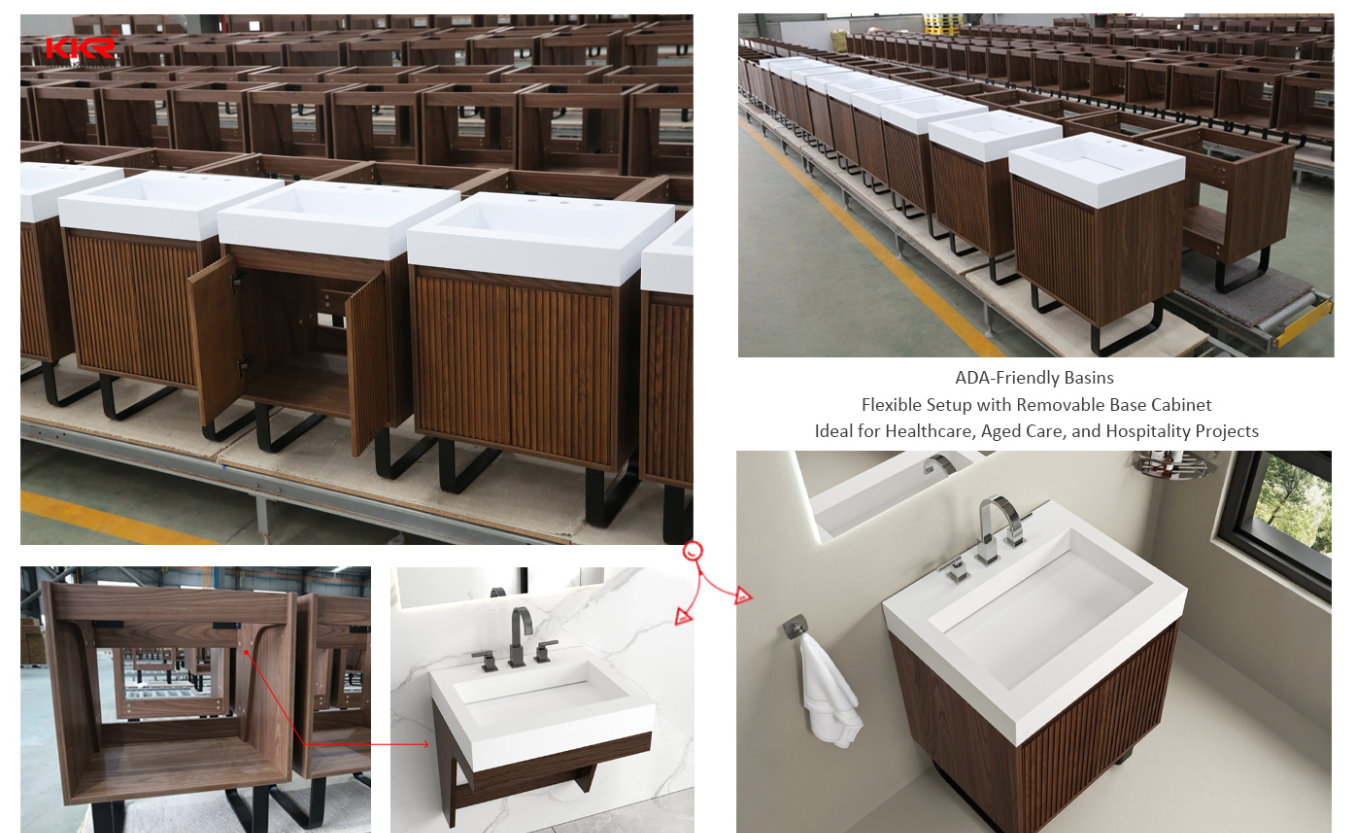
Accessibility and usability requirements of ADA standards do not depend on the aesthetic appearance of the sink, but on the interaction of the user with it.
A wheelchair user should be able to access the sink freely, adopt a proper posture, and control its operation.
Many projects fail because compliance is treated as a visual alignment exercise. A sink can be correctly designed but made non-functional if the area underneath the sink is obstructed or if operating controls are difficult.
Only when all elements of the design come together do we get compliance.
ADA Bathroom Sink Height and Clearance Requirements
Height is often the first consideration, but height alone is not sufficient. The height can only be utilized when there is space underneath the sink.
A correctly installed sink at the required height becomes dysfunctional if there is no clearance underneath the sink where users have to move forward to use it.
Core requirements
- Sink Height: No more than 34 inches from the finished floor
- Height of knee clearance: Not less than 27 inches
- Minimum clear width: 30 inches
- Depth allowance: Must support forward reach
- Toe clearance: Mandatory for stability
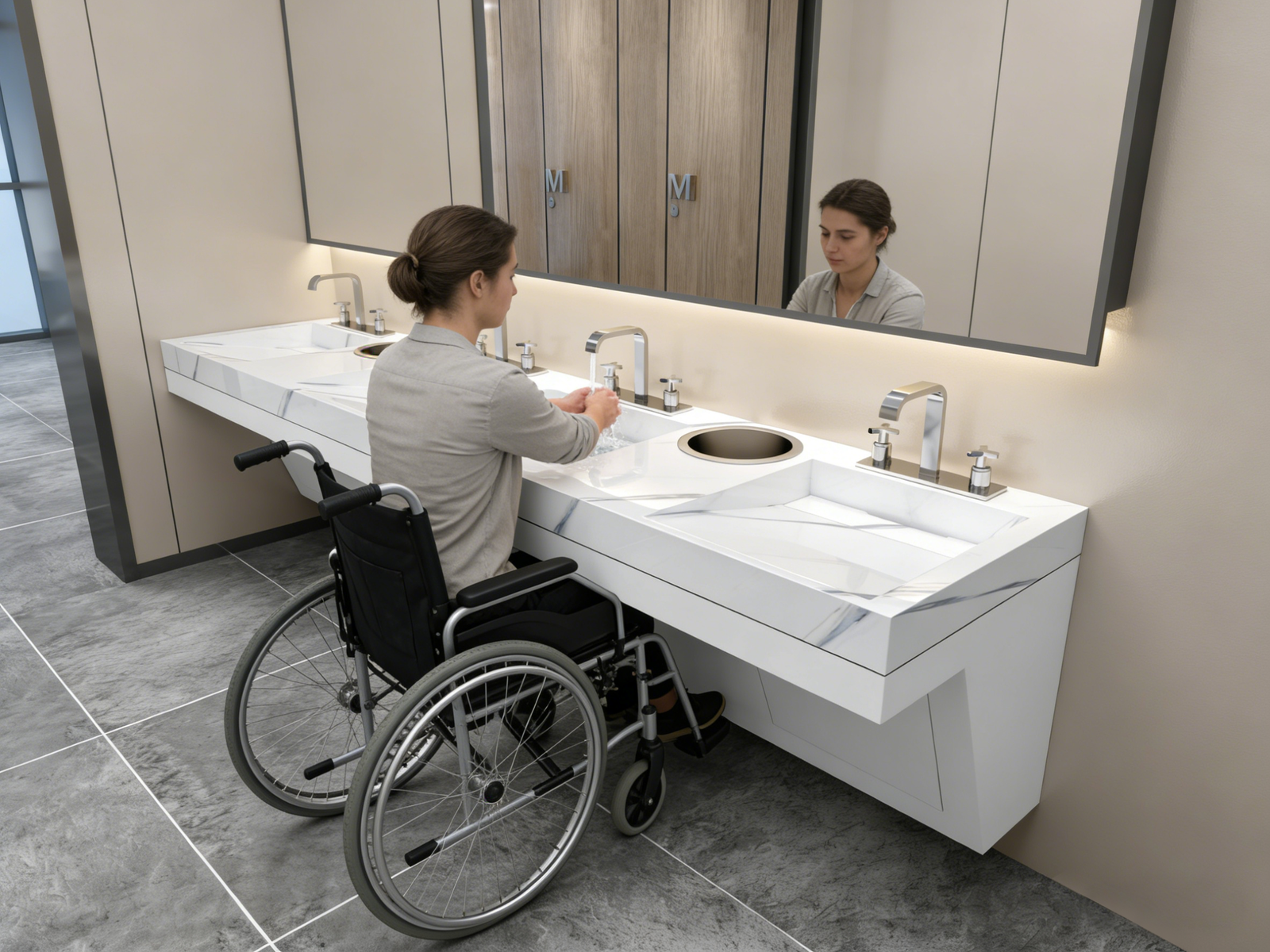
Incorrect installations often follow the same pattern. While designers think about the height, the clearance underneath the sink is often ignored. It leads to more problems.
- Cabinet units block knee space
- Plumbing reduces usable depth
- Clearance dimensions are not maintained consistently
There is no way to adjust this at a later stage as these will require cabinetry work or plumbing repositioning, which affects cost and schedule.
Faucet and Control Requirements
The faucet installation is usually seen as a design decision. However, this is relevant in the ADA compliance process. It should ensure that only one hand is needed for activation, as well as ensure that there is no need for tight gripping or twisting. This should also not involve much force.
A lever or motion sensor faucet would satisfy these criteria with ease. Push buttons might qualify, too, as long as they work seamlessly.
Sensor faucets are widely preferred in commercial spaces. While they improve hygiene and make it easier to use, improper placement might cause usability problems. Inconsistent behavior of the sensor makes the faucet difficult for the user to control.
It is still possible to change the type of faucet once it has been installed, but it will impact the plumbing layout and design uniformity.
Pipe Protection and Safety Requirements
Space beneath the sink is not just for clearance. It is an active user zone. Any exposed element becomes a potential safety risk.
Hot water pipes and sharp edges can cause burns or injury. This is why ADA standards require insulation or protective covering.
Pipe protection is often missed during installation because it is not visually prominent. It becomes an issue during inspection or after user feedback.
A compliant setup ensures:
- Pipes are insulated or covered
- Surfaces are smooth
- No sharp or exposed components are present
Ignoring this requirement creates both compliance failure and safety liability. This is not something cleaning or maintenance can address later.
Installation Rules That Affect Compliance
Correct specifications do not guarantee compliance. Installation determines whether those specifications translate into usable outcomes.
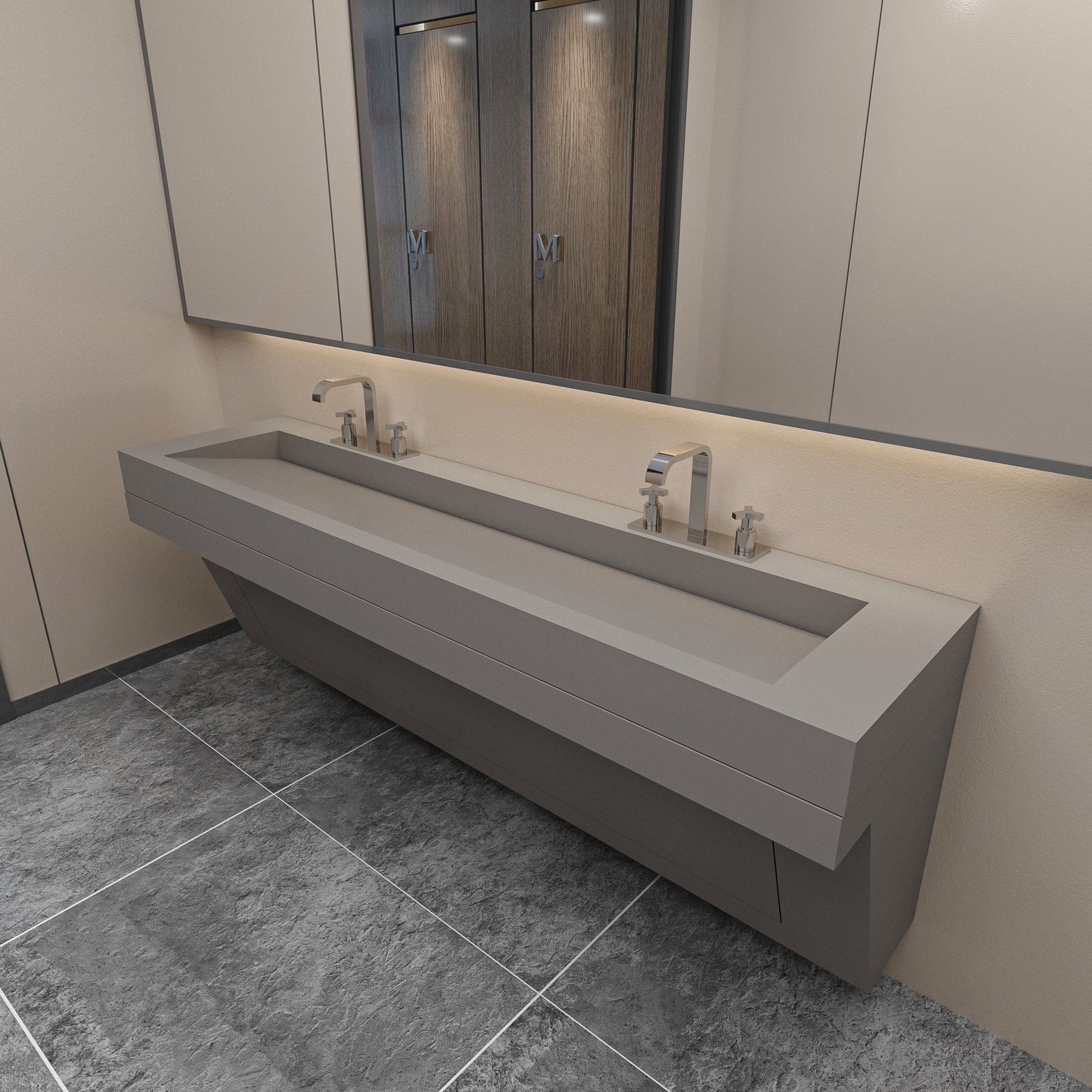
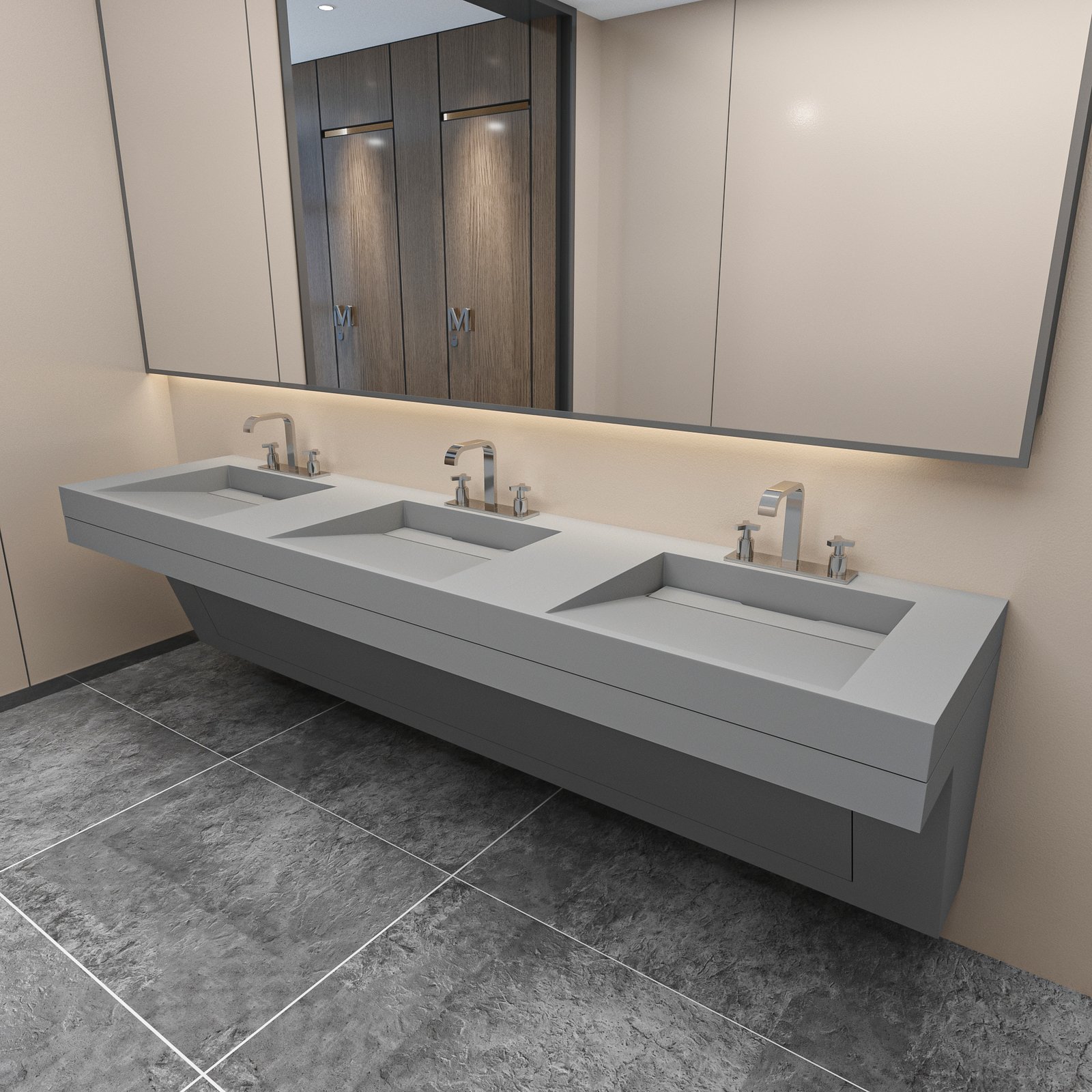
Wall-mounted sinks are generally preferred because they maintain open space underneath. Countertop installations require more attention, as they often introduce obstructions.
Alignment is critical. Even small deviations in mounting height can lead to non-compliance. Flooring variations and incorrect measurements during installation are common causes.
Plumbing placement must also be coordinated. Pipes positioned incorrectly can reduce usable clearance even if the sink itself is correctly installed.
Installation errors cannot be corrected with minor adjustments. Reinstallation becomes necessary, which disrupts project timelines and increases cost.
Common ADA Compliance Mistakes
Most compliance issues follow predictable patterns. These are not rare exceptions. They occur across projects of all scales.
- Incorrect sink height: Even small deviations make the sink inaccessible
- Blocked knee clearance: Cabinetry or design elements restrict user positioning
- Exposed plumbing: Creates safety risks and fails inspection
- Improper faucet selection: Requires force or movement that is not compliant
- Poor coordination between teams: Design and plumbing decisions conflict
Each of these mistakes has the same outcome. The installation fails in real use.
These issues cannot be corrected without rework. Planning at the design stage is the only reliable way to avoid them.
ADA Sink Requirements in Hotels and Commercial Projects
A new layer of complexity emerges in hotels and commercial settings as compliance becomes an issue that needs to be consistently addressed over dozens and possibly hundreds of bathrooms. One mistake in the specifications will automatically multiply throughout the project, resulting in increased costs and reduced efficiency.
Consistency is key. Each bathroom should be standardized according to the brand’s requirements. Consistent bathroom configurations, fixture placements, and dimensions are crucial for the proper utilization of space and its appearance. Guests might not understand what exactly caused their dissatisfaction, but inconsistencies definitely play a role in reducing guest satisfaction.
The procurement staff needs to have confidence that the fixtures provided are consistent and easy to install. Any variations will result in additional time lost during the installation and increase the likelihood of non-compliance during the inspections.
Finally, durability cannot be overlooked. In commercial environments, sinks undergo constant utilization, which means that they cannot loosen or move from their positions.
An ADA compliance sink in hospitality settings is not only about meeting regulatory standards. It must support brand consistency, streamline operations, and reduce long-term maintenance challenges across the entire property.
ADA Sink Requirements Summary
| Requirement | Specification | Why It Matters |
| Sink height | Max 34 inches | Ensures accessibility |
| Knee clearance | Min 27 inches | Allows wheelchair positioning |
| Width clearance | Min 30 inches | Supports approach |
| Faucet type | One-hand operable | Ease of use |
| Pipe protection | Insulated/covered | Prevents injury |
| Installation | Wall-mounted preferred | Maintains open space |
It is important to note that real compliance depends on how these elements work together.
Design Decisions That Cannot Be Corrected Later
Some decisions define long-term performance and cannot be adjusted after installation.
Height alignment is one of them. A sink installed too high cannot be fixed without removal. Cabinet-based designs that block clearance must be rebuilt.
Plumbing layout is another critical factor. Pipes placed incorrectly reduce usable space and cannot be repositioned easily.
Faucet selection also falls into this category. Choosing the wrong type creates usability issues that affect every user interaction.
Cleaning will not solve these problems. Maintenance cannot compensate for incorrect design decisions.
The specification stage is where compliance is secured. Once installation is complete, flexibility is limited.
Ensure Your ADA Sink Design Meets Compliance Standards
ADA sink requirements define how a bathroom performs in real use. Compliance depends on precise coordination between design, specification, and installation.
Mistakes made early lead to long-term operational issues, safety risks, and costly rework. These outcomes are preventable with informed decisions at the right stage.
KKR Bath supports commercial projects with solutions that align with ADA standards while maintaining consistency across installations.
Connect with KKR Bath to ensure your project meets ADA sink requirements with the right balance of usability, durability, and efficiency.
FAQs
1. What is the standard ADA bathroom sink height?
The maximum height is 34 inches from the finished floor to the top of the sink.
2. Can a countertop sink be ADA-compliant?
Yes, if clearance and height requirements are maintained. Many fail due to blocked space underneath.
3. Do all commercial bathrooms require ADA sinks?
Most require ADA-compliant fixtures depending on building type and regulations.
4. What happens if a sink fails ADA inspection?
Rework is required, often involving removal and reinstallation, which delays the project.
5. Are sensor faucets ADA compliant?
Yes, if they operate without force and respond consistently during use.