Bathroom materials that perform well in residential spaces often fail when exposed to the demands of commercial environments.
Hotels, apartments, and public facilities experience high-frequency use, constant moisture, and aggressive cleaning routines — conditions that quickly expose material limitations.
Understanding why traditional bathroom materials fail is essential for reducing long-term risk in commercial projects.
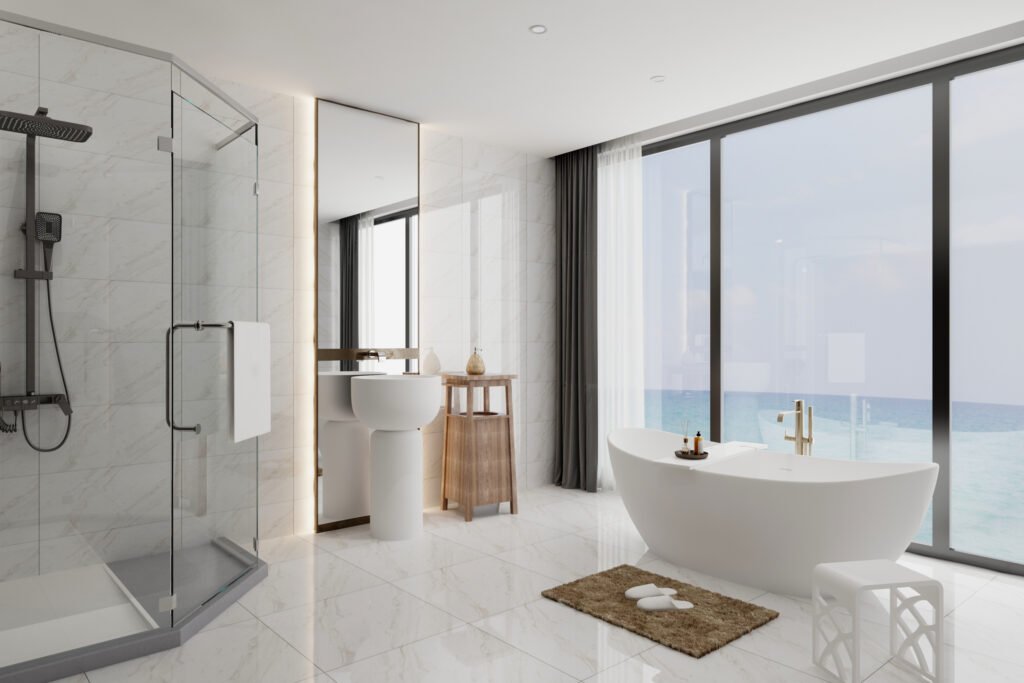
The Difference Between Residential and Commercial Bathroom Use
In residential bathrooms, usage is predictable and limited.
In commercial environments, the situation is very different:
- Hundreds of users per day
- Continuous exposure to moisture
- Frequent cleaning with strong chemicals
- Tight maintenance schedules
Materials that are not designed for these conditions often degrade faster than expected.
Failure Point 1: Porous Surfaces and Moisture Absorption
Many traditional bathroom materials contain microscopic pores that absorb moisture over time.
This leads to:
- Staining and discoloration
- Trapped moisture beneath the surface
- Gradual material weakening
In high-traffic bathrooms, these issues appear much sooner than anticipated, increasing maintenance effort and replacement frequency.
Failure Point 2: Joints, Seams, and Grout Lines
Commercial bathrooms rely heavily on joints:
- Between basins and countertops
- Around shower trays and wall panels
- At corners and edges
Over time, these joints become:
- Points of water penetration
- Areas for mold and bacteria growth
- Common causes of leakage and surface damage
The more joints a bathroom has, the higher the long-term failure risk.
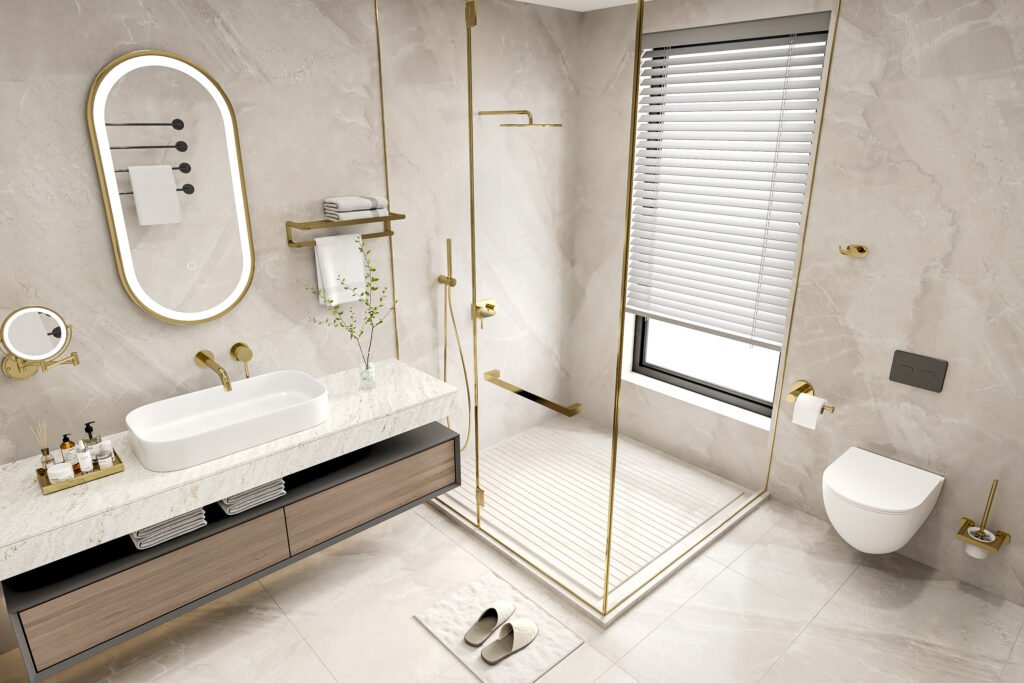
Failure Point 3: Surface Damage Under Frequent Cleaning
Commercial bathrooms require frequent cleaning to meet hygiene standards.
However, repeated exposure to:
- Abrasive cleaning tools
- Strong detergents
- Disinfectants
can damage the surface finish of traditional materials, causing:
- Loss of gloss
- Surface scratches
- Reduced aesthetic lifespan
Once the surface deteriorates, maintenance becomes more intensive and costly.
Failure Point 4: Inconsistent Performance Across Large Projects
In hotel and apartment developments, bathrooms are replicated across dozens or hundreds of units.
Traditional materials often show:
- Variations in color tone
- Inconsistent surface texture
- Uneven wear over time
These inconsistencies become highly visible in large-scale projects, negatively affecting overall project quality perception.
Why Material Failure Becomes a Project-Level Risk
Material issues in commercial bathrooms rarely stay isolated.
They often lead to:
- Increased maintenance complaints
- Guest dissatisfaction in hospitality projects
- Unplanned shutdowns for repair
- Budget overruns during operation
This is why material selection should be evaluated at the project system level, not as individual product choices.
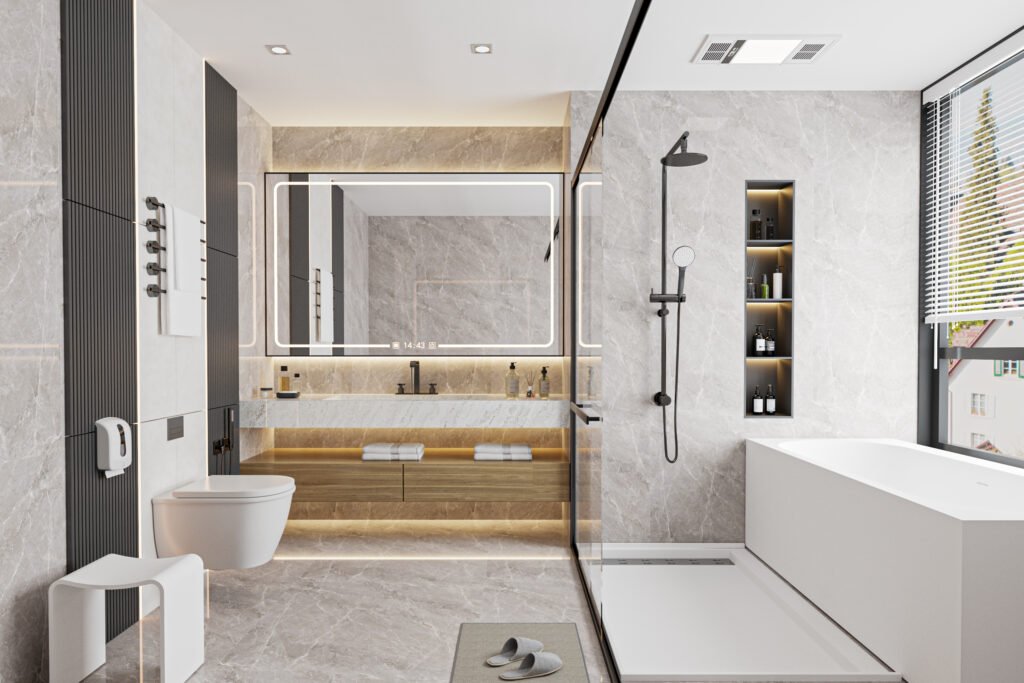
How Solid Surface Materials Address These Challenges
Solid surface materials are increasingly specified for commercial bathrooms because they address the root causes of failure:
- Non-porous structure reduces moisture absorption
- Seamless fabrication minimizes joints
- Consistent material composition ensures uniform appearance
- Repairable surfaces extend service life
When used as part of a system-based bathroom solution, solid surface materials significantly reduce long-term performance risk.
👉 This approach is a core element of many one-stop bathroom solutions used in hotel and commercial projects today.
You can see how a complete bathroom system is applied in real projects here:
https://kkrbath.com/total-solution-for-bathroom/
When Traditional Materials Are Most Likely to Fail
Traditional bathroom materials are especially vulnerable in:
- Hotel bathrooms with high occupancy rates
- Public and commercial washrooms
- Apartment developments with centralized maintenance
- Renovation projects with limited downtime
In these scenarios, durability and maintenance predictability matter more than initial material cost.
Final Thoughts
Material failure in commercial bathrooms is rarely sudden.
It is the result of long-term exposure to conditions that traditional materials were never designed to handle.
By selecting materials and systems engineered for high-traffic use, project teams can reduce maintenance risk, protect brand standards, and control lifecycle cost.
For hotel and commercial developments where reliability matters, choosing a system-based bathroom solution is not a premium option — it is a practical one.
👉 Learn how a total bathroom solution for commercial projects improves long-term performance:
https://kkrbath.com/total-solution-for-bathroom/