Key Takeaways
- A wall-mounted basin saves floor space, is easy to clean, and suits hotels, apartments, and accessible bathrooms
- A countertop basin makes a strong visual statement and works best in luxury villas, boutique hotels, and master bathrooms
- Solid surface basin options are available in both styles and remain the top choice for hygiene and durability in commercial projects
- Always match the basin style to the project type, space size, and design goal
- For ADA compliance, wall-mounted basins are the most practical and reliable choice
- The basin style should always follow the project type; let the space decide the basin, not the other way around
A bathroom basin defines the entire look of the space. One of the most important decisions for designers and homeowners in modern bathroom planning is choosing between a wall-mounted basin and a countertop basin. Both are strong choices for modern bathrooms but suit different spaces, budgets, and design visions.
Read the blog below, as it breaks down the key differences between the two so you can confidently choose the right bathroom basin for your project.
What is a wall-mounted basin?
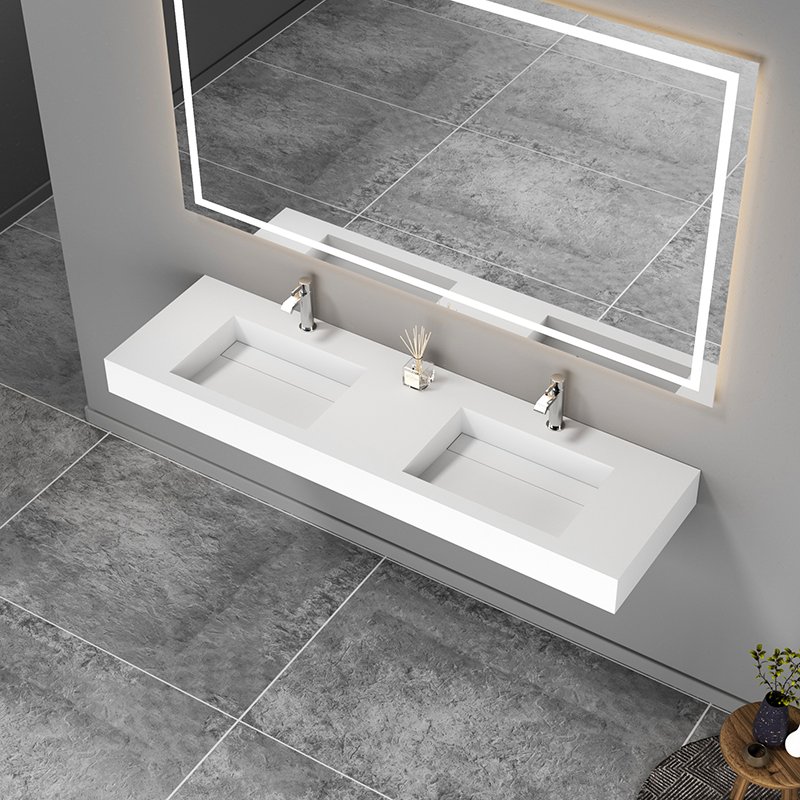
A wall mounted basin is fixed directly onto the wall and has no cabinet or pedestal below. The plumbing is hidden inside the wall or behind a slim panel, so that leaves the floor completely open below the basin. This type of bathroom basin is mostly installed in hotels, apartments, and commercial bathrooms where space efficiency and clean design matter. Wall-mounted basins are available in ceramic, solid surface basin options, stone resin, and quartz, giving designers a wide range of options in both style and finish.
What Is a Countertop Basin?
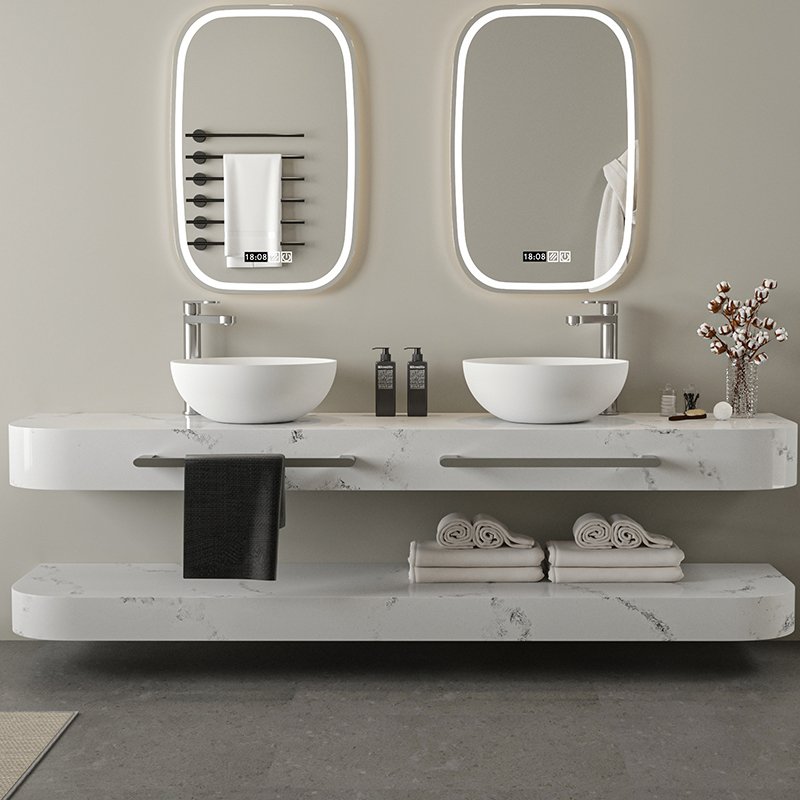
A countertop basin is also called a vessel basin, as it sits on top of a countertop surface. It sits on top of the counter rather than being built into it, making it a visible design feature of the bathroom.
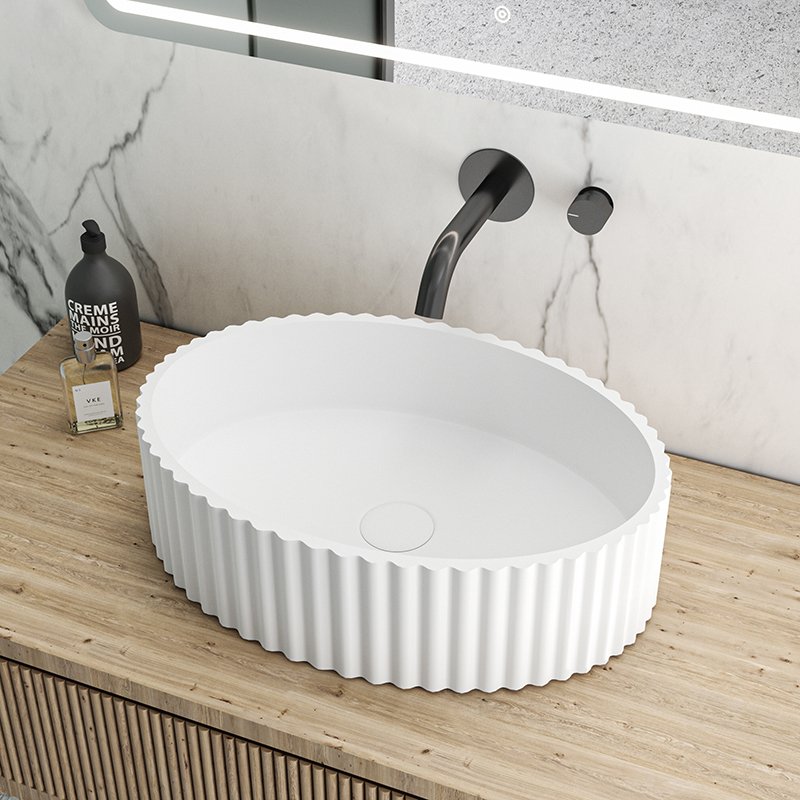
Countertop basins are used in master bathrooms, boutique hotel rooms, and luxury villa projects where the basin stands out as a statement piece. It looks good with wall mounted faucets and simple, uncluttered vanity units below.
Advantages of a Wall Mounted Basin
- Saves Floor Space – There is nothing below the basin, so the floor of the wall mounted basin remains completely open. It is used in compact bathroom spaces, which also look less cluttered. These types of basins are used in city apartments, small hotel rooms, and any project where using minimal space is a priority.
- Faster and Easier to Clean – The open floor below means cleaning is quicker and more thorough. There are no cabinet edges, pedestal bases, or tight corners to work around, just clear floor space that can be wiped off easily. This is especially useful in hotels where multiple rooms are cleaned every day
- Height Adjustment – It is easier to install a wall mounted basin at any height, which makes it the most reliable option for ADA-compliant bathrooms. The height of the rim and knee clearance can be set to meet accessibility standards without affecting the overall design
- Clean, Minimal Aesthetic – Wall mounted basins suit modern and minimalist bathroom designs. The floating appearance, clean lines, and open floor create a modern bathroom sink aesthetic that works well in residential and commercial spaces.
- Practical for Large-Scale Projects – For large projects with many identical bathrooms, wall mounted basins are easy to install repeatedly and give every room the same clean, uniform look. They are also easy to maintain, which keeps long-term costs low across large projects.
Advantages of a Countertop Basin
- Strong Visual Impact – A countertop basin is placed above the vanity as a design statement. You will see countertop basins in boutique hotel suites, luxury villas, and master bathrooms. This adds a premium quality that raises the value of the space.
- Design Freedom – Countertop basins have a wide range of shapes, materials, and styles. Designers working on big projects can choose from solid surface basin finishes, terrazzo, cultured marble, and natural stone materials.
- Simpler Installation – Countertop basins have an easy installation process, as their installation does not require plumbing to be hidden inside the wall. They sit on an existing surface and connect to standard pipework below the vanity. This makes them easier and less expensive to install, particularly in renovation projects where opening walls is not practical.
- Pairs Well With Luxury Vanity Units – A countertop basin with a well-designed floating vanity creates a complete bathroom. The vanity takes care of storage, and the basin takes care of style, so together they create a bathroom that is both functional and premium.
Wall Mounted Basin vs Countertop Basin: Key Differences
Choosing between these two basin styles depends on how each one performs:
- Space – Wall-mounted basins keep the floor clear, making them the better choice for compact layouts. Countertop basins need a vanity unit below, which takes up floor space but adds storage space in return.
- Installation – Countertop basins are quicker and simpler to install, so no in-wall plumbing work is needed. Wall-mounted basins require more planning and labor, particularly in renovation projects, but deliver a cleaner result once installed.
- Design Style – Wall-mounted basins lean towards minimal and contemporary styles. They suit spaces where clean lines and an uncluttered look are the priority. Countertop basins have a stronger visual impact and so work best for top hotel projects.
- Cleaning and Maintenance -Wall mounted basins are easy to clean as they have no edges or bases, which is an advantage in high-traffic commercial settings. Countertop basins require regular attention around the edges where the basin meets the counter, as moisture tends to collect there over time.
- ADA Compliance – Wall-mounted basins are far easier to make ADA-compliant. The height and knee clearance can be set accordingly during installation, whereas countertop basins have less flexibility, as the basin height depends on the vanity unit below.
- Material Options – Both styles are available in ceramic, solid surface, and stone resin. Countertop basins offer a wide material range, including terrazzo, marble, and cultured marble, because the basin is a visible centerpiece, and material choice plays a bigger role in the design.
Here is a quick side-by-side comparison to help you decide:
| Feature | Wall mounted | Countertop Basin |
| Space | Frees up floor space | Requires a vanity unit |
| Installation | More complex, plumbing in the wall | Easier to install |
| Design Style | Minimal, modern | Bold |
| Cleaning | Easy to clean underneath | Countertop edges need regular cleaning |
| Best For | Small bathrooms, hotels, apartments | Master bathrooms, luxury villas |
| ADA Compliance | Easy to set the correct height | Harder to adjust height |
| Material Options | Ceramic, solid surface, stone resin | Ceramic, solid surface, marble, terrazzo |
Best Materials for Wall Mounted and Countertop Basins
The choice of the material plays an important role in the long-term performance of the bathroom basin. The right material depends on the design, usage, and project type. The right material depends on the project type, usage intensity, and design priority.
The right material depends on the project type. Here is a simple breakdown:
Solid Surface – Best for Commercial and Hygiene-Critical Projects
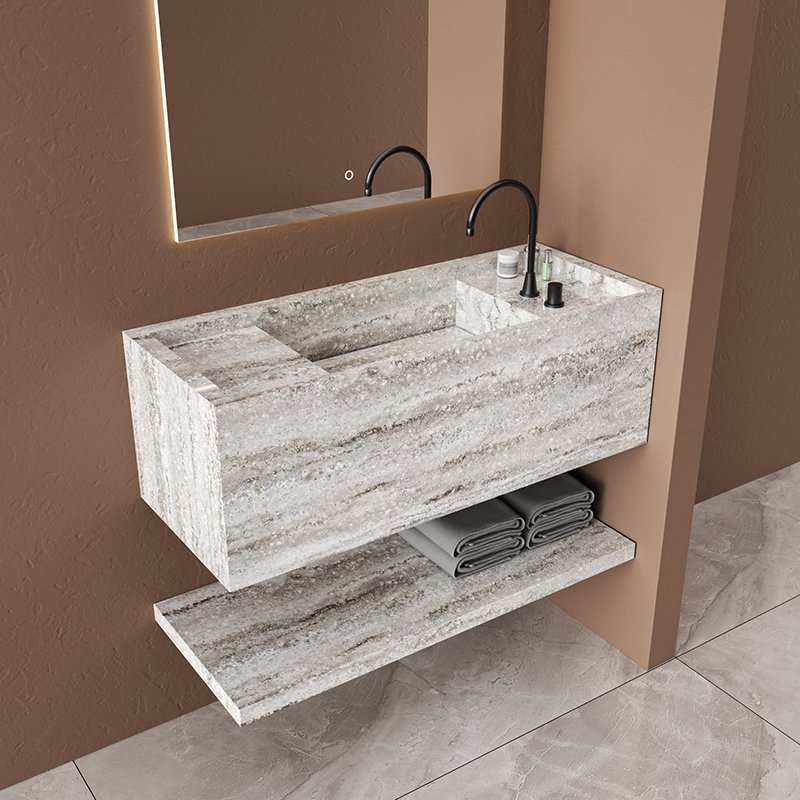
Solid surface is the most popular choice across hotels, apartments, healthcare facilities, and any project where hygiene and durability are priorities. It is non-porous, which means it does not absorb bacteria or moisture. It is easy to clean, resistant to staining, and available in both wall mounted and countertop styles. Surface scratches can be sanded out, which extends the lifespan significantly. For large projects, solid surface is the practical choice -consistent, low maintenance, and built to last.
Ceramic – Best for Standard and Budget-Conscious Projects
Ceramic is the most widely used basin material across the industry. It is cost-effective, widely available, easy to manufacture at scale, and performs well in standard residential and commercial settings. It is a dependable choice for apartment developments, standard hotel rooms, and any project where budget efficiency is a priority without compromising on cleanliness or basic durability. It is not as seamless or repairable as solid surfaces, but it covers the majority of standard use cases reliably.
Terrazzo – Best for Luxury and Statement Bathrooms
Terrazzo is a premium material that gives any bathroom a luxurious look. It is the top choice for boutique hotels, luxury villas, and master bathrooms where the basin is a design feature. Terrazzo countertop basins work as design centerpieces. It requires more careful maintenance than solid surface or ceramic, but for projects where design impact justifies the investment, terrazzo consistently delivers.
Which Basin Style Works Best for Hotels and Apartments?
Hotels
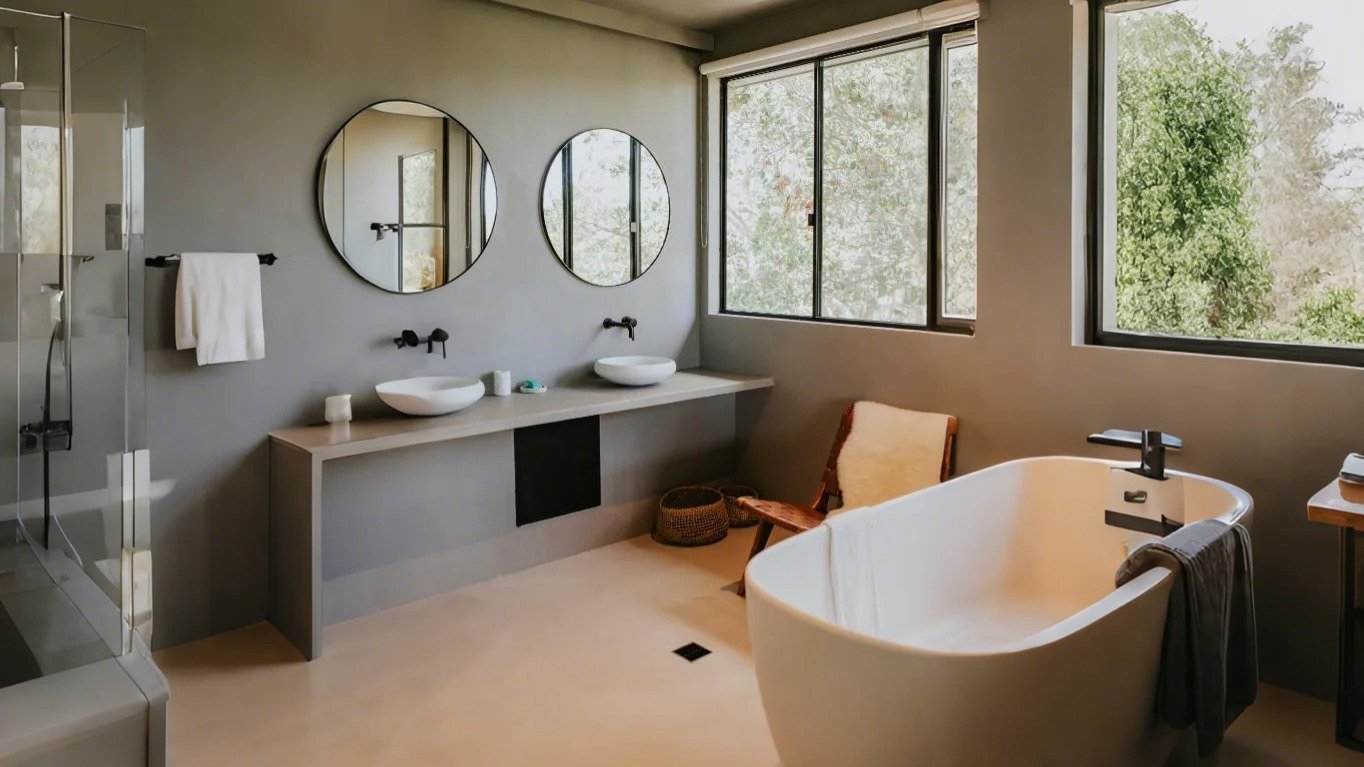
For standard hotel guest rooms, wall mounted basins are the best choice. They free up floor space in compact areas, are quick to clean between guest stays, and can be installed at an equal height across all rooms to meet the accessibility standards. Solid surface wall mounted basins have seamless finishes and are mostly popular in hospitality projects since they resist bacteria and are easy to maintain.
For boutique hotels and luxury suites, countertop basins are widely used. The bathroom is part of the guest experience, and a well-designed bathroom leaves a good impression on the guest. A solid surface or terrazzo countertop basin can become the centerpiece of the room.
Apartments
In apartment projects, wall mounted basins are the best choice. They make compact bathrooms feel larger, are easy to maintain, and work across multiple identical layouts.
In premium apartment projects, countertop basins add a luxury feel to master bathrooms without a significant increase in cost. Pairing a countertop solid surface basin with a floating vanity is a popular combination in high-end residential projects where design quality is part of the selling point.
How to Choose Between Wall Mounted and Countertop Basins
Choose between the wall mounted and countertop basin based on the project type.
| Project Type | Recommended Basin Style |
| Compact apartment | Wall mounted basin |
| Standard hotel room | Wall mounted basin |
| Luxury villa bathroom | Countertop basin |
| Boutique hotel suite | Countertop basin |
| ADA-compliant bathroom | Wall mounted basin |
| Master bathroom | Countertop basin |
| Healthcare facility | Wall-mounted basin, Solid Surface |
Manufacturer Insight: What Real Projects Tell Us
Experience from large-scale hospitality and residential projects across the Maldives, UAE, Japan, Thailand, and the USA shows a clear pattern in how basin styles are chosen. In hotel projects with 50 or more rooms, wall-mounted basins dominate mainly because of their space efficiency, ease of cleaning, and ability to meet accessibility standards consistently across all rooms.
In villa and resort projects, countertop basins are far more common. Designers working on luxury properties prefer the visual impact of a statement basin, and clients in this segment are willing to invest in premium materials like solid surface, terrazzo, and cultured marble.
A wall mounted basin in a boutique hotel suite may feel too clinical. A countertop basin in a compact city apartment may feel overcrowded. Matching the style to the space is always the right approach.
For commercial projects where durability and hygiene are non-negotiable, solid surface remains the most specified material across both wall mounted and countertop basin styles.
Ending Thoughts
Choosing between a wall mounted basin and a countertop basin comes down to one thing: matching the right style to the right space. Whether you are designing a compact hotel room or a luxury villa bathroom, the basin you choose shapes the entire experience. At KKR Bath, you will find solid surface basin options in both styles, built for modern bathroom sink projects that demand durability, hygiene, and design that lasts.
Frequently Asked Questions
1. What is the difference between a wall mounted basin and a countertop basin?
A wall mounted basin is fixed directly to the wall with open floor space below and plumbing hidden inside the wall. A countertop basin sits on top of a vanity unit as a visible design feature. Wall mounted basins suit minimal, space-efficient layouts, while countertop basins work best where design impact is the priority.
2. Which basin style is better for hotels?
For standard hotel rooms, wall mounted basins are the preferred choice as they save space, are quick to clean between guest stays, and can be installed at a consistent height for accessibility compliance. For boutique hotels and luxury suites, countertop basins are the stronger choice, as they create a premium bathroom experience that guests notice and remember.
3. Which basin is easier to install and maintain long-term?
Countertop basins are easier and quicker to install, as they require no in-wall plumbing work. However, for long-term maintenance, especially in commercial projects, wall-mounted basins are easier to keep clean due to the open floor space underneath, which reduces cleaning time significantly across large-scale developments.
4. What material works best for a modern bathroom basin in commercial projects?
Solid surface is the most specified material for modern bathroom sinks in hotels, apartments, and healthcare facilities. It is non-porous, resistant to bacteria and moisture, easy to clean, and available in both wall mounted and countertop styles. It also allows surface scratches to be sanded out, extending the lifespan of the basin significantly.
5. How do I choose the right basin style for my project?
The basin style should always follow the project type. Wall mounted basins work best in compact apartments, standard hotel rooms, healthcare facilities, and ADA-compliant bathrooms. Countertop basins are the right choice for luxury villas, boutique hotel suites, and master bathrooms where the design is meant to impress. Matching the style to the space and usage is always the right approach.