Choosing the right bathroom basin is not a minor design decision for hotels. It directly affects daily maintenance efficiency, long-term operating cost, hygiene standards, and overall guest experience. For 4–5 star hotels, resorts, serviced apartments, and high-end commercial projects, basin material selection should always be evaluated from a lifecycle and performance perspective — not just initial price.
This article compares solid surface basins and ceramic basins specifically for hotel applications, helping U make a clearer and more confident specification decision.
WHY BASIN MATERIAL MATTERS IN HOTEL PROJECTS
Hotel basins operate under very different conditions compared to residential bathrooms. They are used intensively every day, cleaned frequently with chemical detergents, exposed to constant moisture, and expected to maintain a consistent appearance over many years.
When the wrong basin material is selected, hotels often face problems such as surface staining, visible aging, cracks or chips, hygiene complaints, and frequent replacements. Over time, these issues increase operational costs and negatively affect brand perception.
That is why basin material selection should come before style or shape decisions.
MATERIAL OVERVIEW: SOLID SURFACE VS CERAMIC
Solid surface basins are manufactured from a blend of acrylic resin and mineral fillers. The material is non-porous and can be molded or fabricated into seamless forms. Solid surface is widely specified in luxury hotels and high-end commercial projects due to its durability, hygiene performance, and design flexibility.
Typical characteristics include a seamless appearance, matte or satin finish, customizable dimensions, and easy integration with vanity tops or countertops.
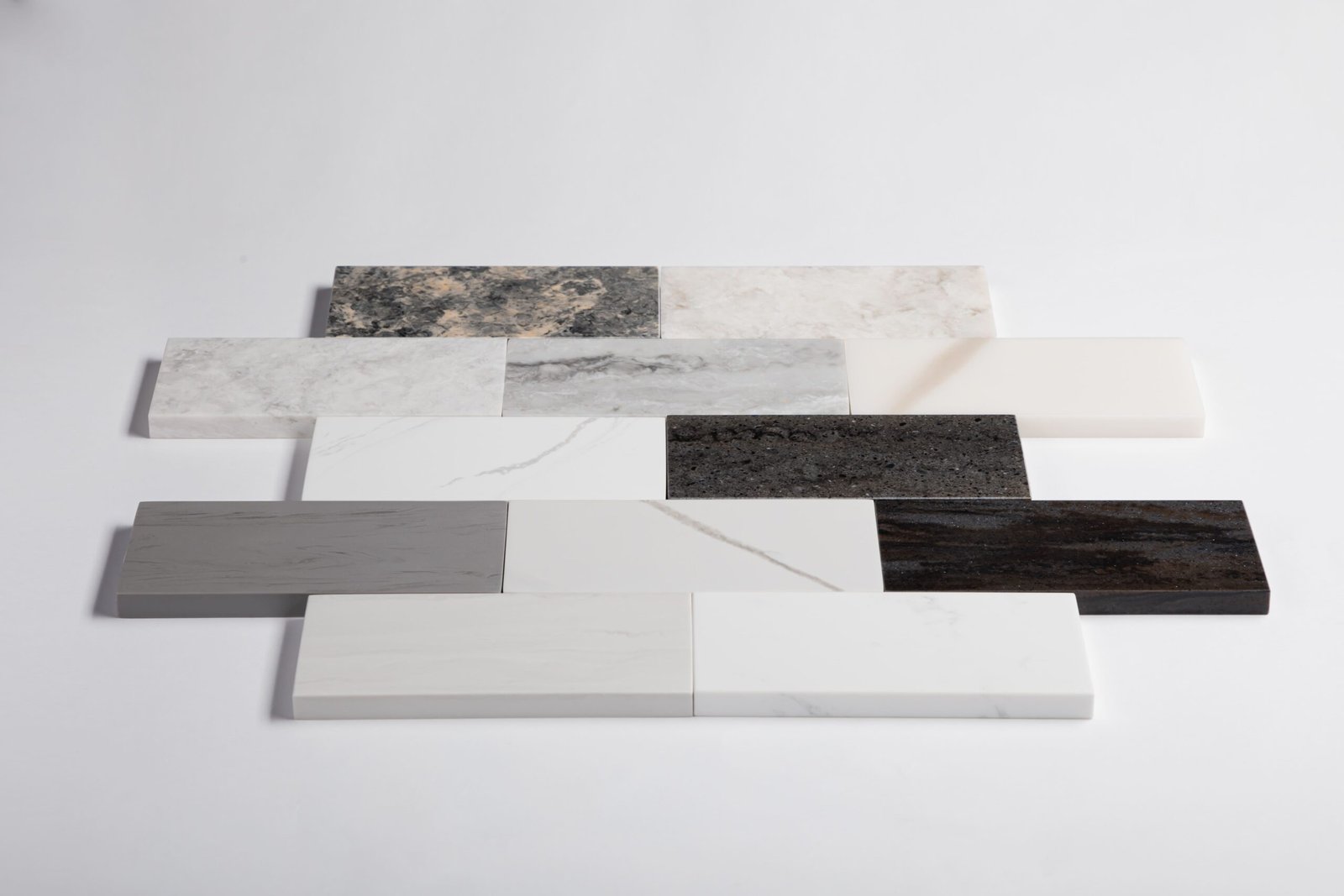
Click there to learn more about solid surface material: https://kkrbath.com/solid-surface/
Ceramic basins are produced from fired clay with a glazed surface. They are commonly used in residential projects and economy-level hospitality developments. Ceramic basins are mass-produced, standardized in size, and typically feature a glossy finish.
DESIGN FLEXIBILITY AND CUSTOMIZATION
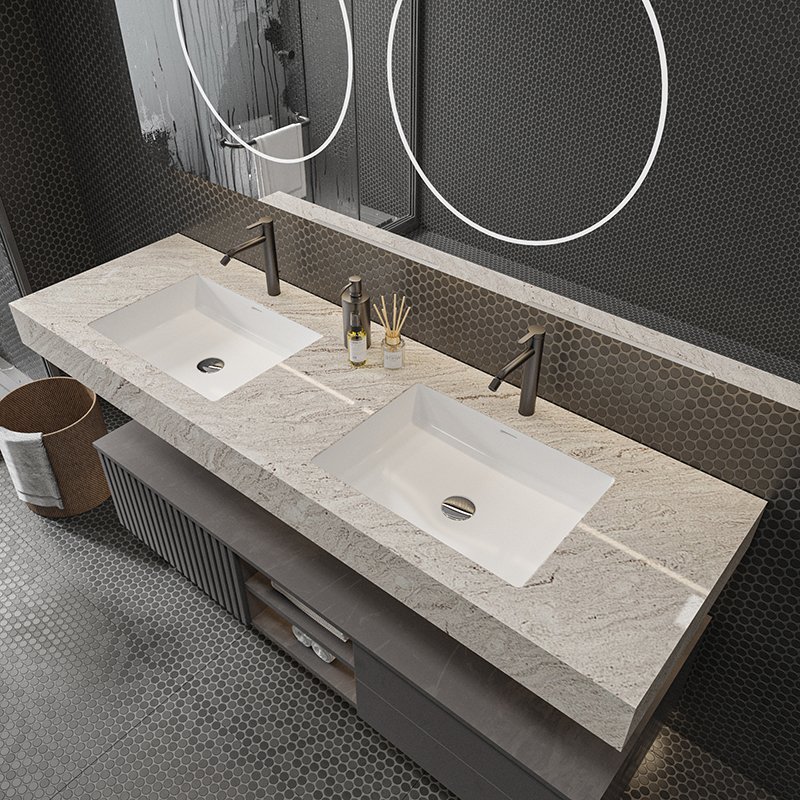
Solid surface basins allow a high level of design freedom. Length, depth, thickness, edge profiles, and drainage details can all be customized to suit the hotel’s design language. This makes solid surface particularly suitable for branded hotels, bespoke vanity systems, and projects requiring visual differentiation.
Ceramic basins, on the other hand, are limited to fixed molds. Size and shape options are restricted, and customization is rarely practical for hotel projects unless very large quantities are involved.
For hotels that value design consistency and brand identity, solid surface offers a clear advantage.
HYGIENE AND MOLD RESISTANCE
Hygiene performance is a critical consideration in hotel bathrooms. Solid surface basins are non-porous, meaning water, soap residue, and bacteria cannot penetrate the material. The seamless structure eliminates joints where mold typically forms, and the surface can be refreshed if needed.
Ceramic basins rely on a glazed surface to remain waterproof. Over time, micro-cracks can develop in the glaze, especially around edges or impact areas. Once the glaze is damaged, stains and bacteria may penetrate the surface and become difficult to remove.
From a long-term hygiene standpoint, solid surface basins deliver more reliable results in commercial environments.
DURABILITY AND DAILY WEAR
Solid surface basins are well-suited for high-traffic hotel use. Minor scratches or surface wear can be repaired through sanding and polishing, often without removing the basin. This ability to restore the surface helps maintain a high-quality appearance throughout the basin’s lifespan.
Ceramic basins are hard but brittle. Chips and cracks caused by impact are permanent, and damaged units usually need to be replaced entirely. This increases both replacement frequency and labor costs over time.
In hotel operations, repairability is often more valuable than surface hardness alone.
MAINTENANCE AND LIFECYCLE COST
Both solid surface and ceramic basins are easy to clean on a daily basis. However, differences become evident over long-term use. Solid surface basins allow stains and wear marks to be removed, extending service life and reducing replacement needs.
Ceramic basins, once stained or chipped, cannot be effectively repaired. Although ceramic basins may have a lower upfront cost, solid surface basins typically offer a lower total cost of ownership when maintenance and replacement are considered.
GUEST EXPERIENCE AND VISUAL APPEAL
Guest perception is influenced not only by visual appearance but also by tactile experience. Solid surface basins provide a warm, stone-like feel with a refined matte finish, contributing to a premium bathroom atmosphere. Seamless design further enhances the sense of quality and cleanliness.
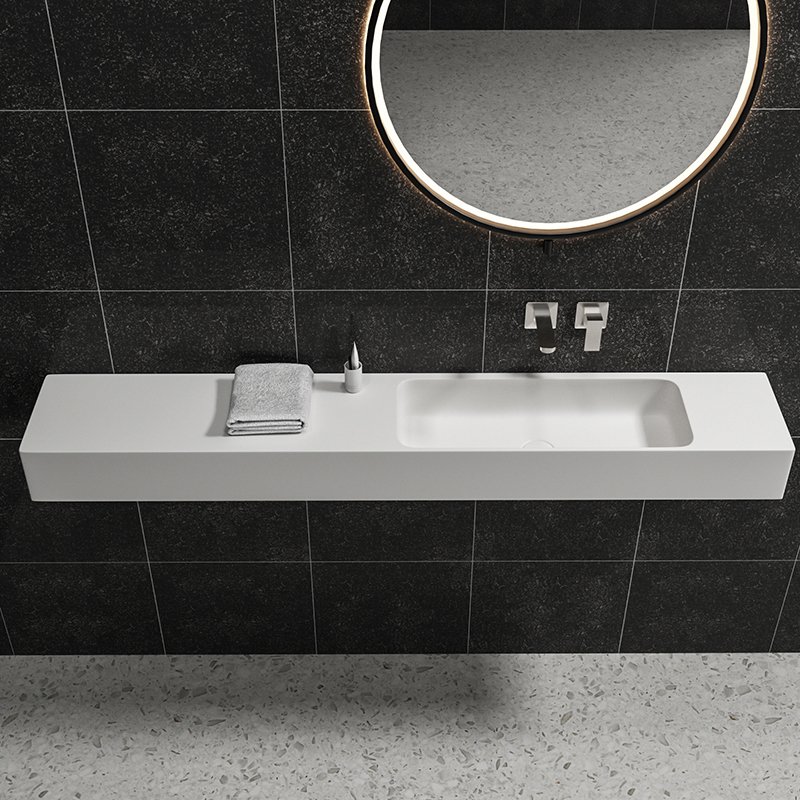
Ceramic basins feel colder to the touch and present a more traditional glossy appearance. While functional, they may not align with the expectations of guests in luxury hospitality environments.
For hotels targeting higher-end markets, material texture and finish play an important role in overall guest satisfaction.
WHICH BASIN IS BETTER FOR DIFFERENT HOTEL TYPES
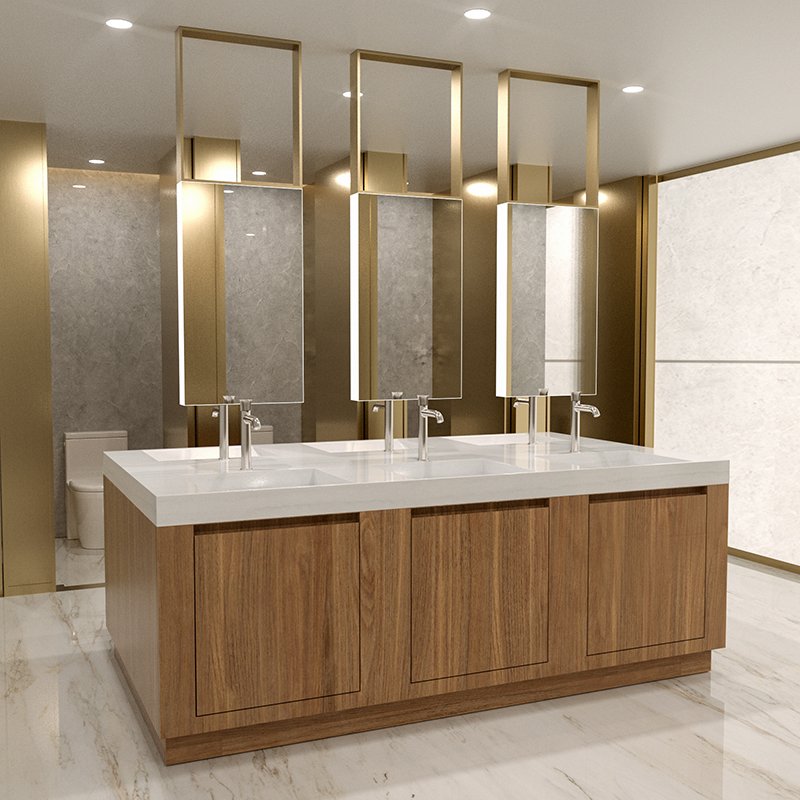
Solid surface basins are ideal for luxury hotels, resorts, villas, boutique hotels, branded properties, and long-term operated projects where durability, hygiene, and design consistency are essential. They are especially effective when combined with integrated vanity tops and customized bathroom layouts.
Ceramic basins remain suitable for budget hotels, short-term rental projects, and developments where cost sensitivity takes priority over long-term performance.
FINAL RECOMMENDATION FOR HOTEL BUYERS
If U are developing a hotel project with a focus on long-term operation, brand positioning, and guest experience, solid surface basins offer clear advantages in customization, hygiene, durability, and lifecycle value.
Check more KKR solid surface basin projects :https://kkrbath.com/projects/
Ceramic basins can satisfy basic functional requirements, but for projects where quality perception and operational efficiency matter, solid surface is the more future-proof choice.
Making the right basin material decision at the planning stage helps U reduce maintenance risk, control long-term costs, and deliver a bathroom experience that meets modern hotel standards.