When choosing the best material for a bathroom vanity top, there are two common options: quartz and solid surface. While both materials offer good performance, they cater to different needs.
Using the right material for projects is an important decision for designers, architects, and hotel project managers. Vanity tops should be good enough to handle cleaning agents and moisture. So it is essential to select the best material for bathroom vanity top installations that can affect both long-term durability and maintenance costs.
Let’s understand how to choose between Quartz vs Solid Surface Vanity Tops and what factors should be kept in mind while choosing.
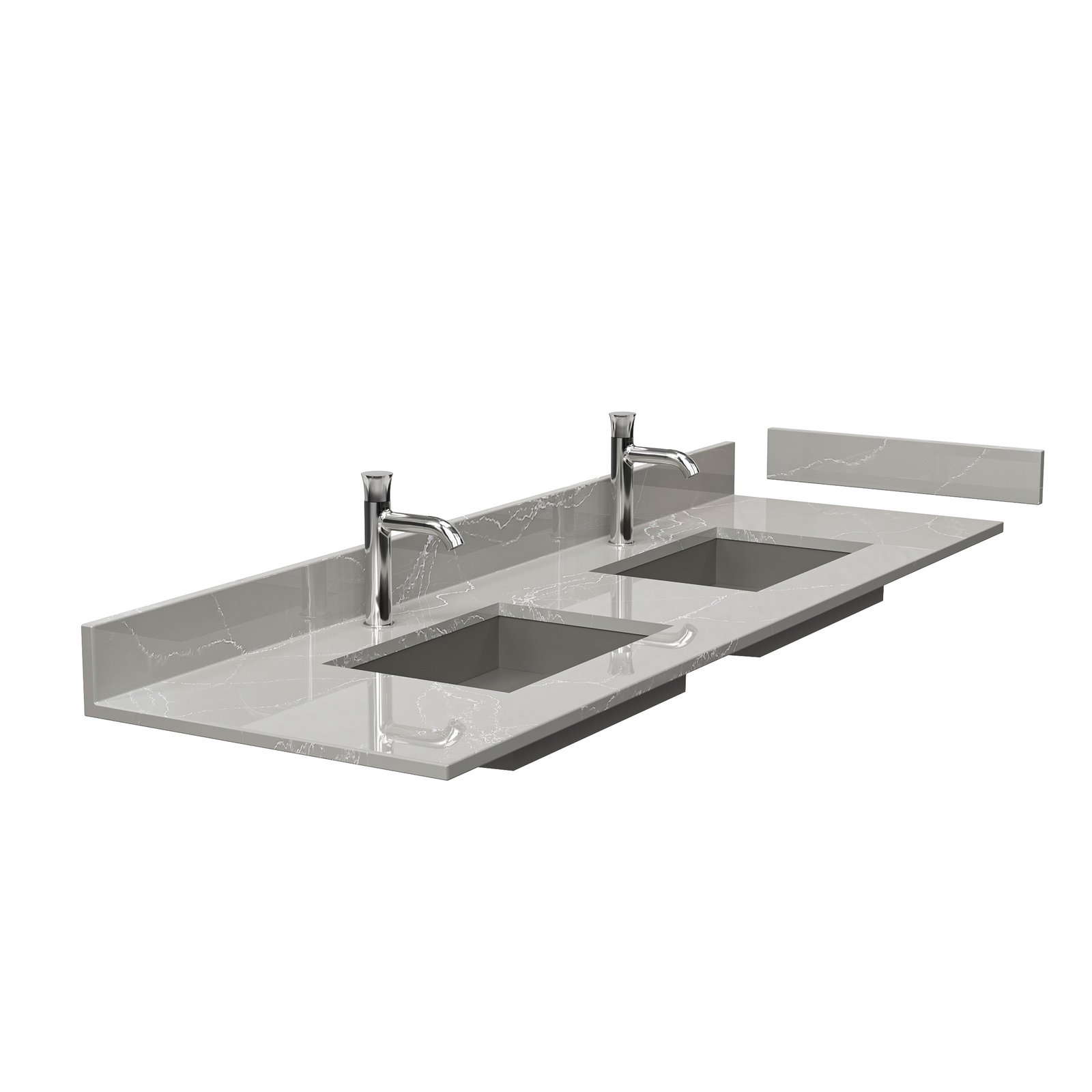
What Is a Quartz Vanity Top?
Quartz vanity tops are made from 90%–95% natural quartz crystals that are bound with polymer resins and pigments. Since quartz is not quarried as a whole single slab but manufactured, quartz tops offer a more uniform appearance with less variation.
It is a non-porous material that resists bacteria, mold, and moisture, which makes it a smart choice for bathrooms. It performs well in high-use bathroom environments and is commonly used in both residential and commercial bathrooms. Quartz vanity tops are available in a wide range of colors, patterns, and styles, including designs that resemble marble or granite. Additionally, the surface does not require sealing, making it easy to maintain.
Key features of quartz vanity tops include:
- Non-porous material that gives a hygienic surface
- It is resistant to scratches and stains
- Wide range of colors, patterns, and designs
- Low maintenance
What Is a Solid Surface Vanity Top?
They are made by blending acrylic or polyester resins with mineral fillers. Initially, they became popular under the brand name Corian. Later, the material expanded into many different brands and formulations. Due to its seamless bathroom countertop design, it is highly favored by customers.
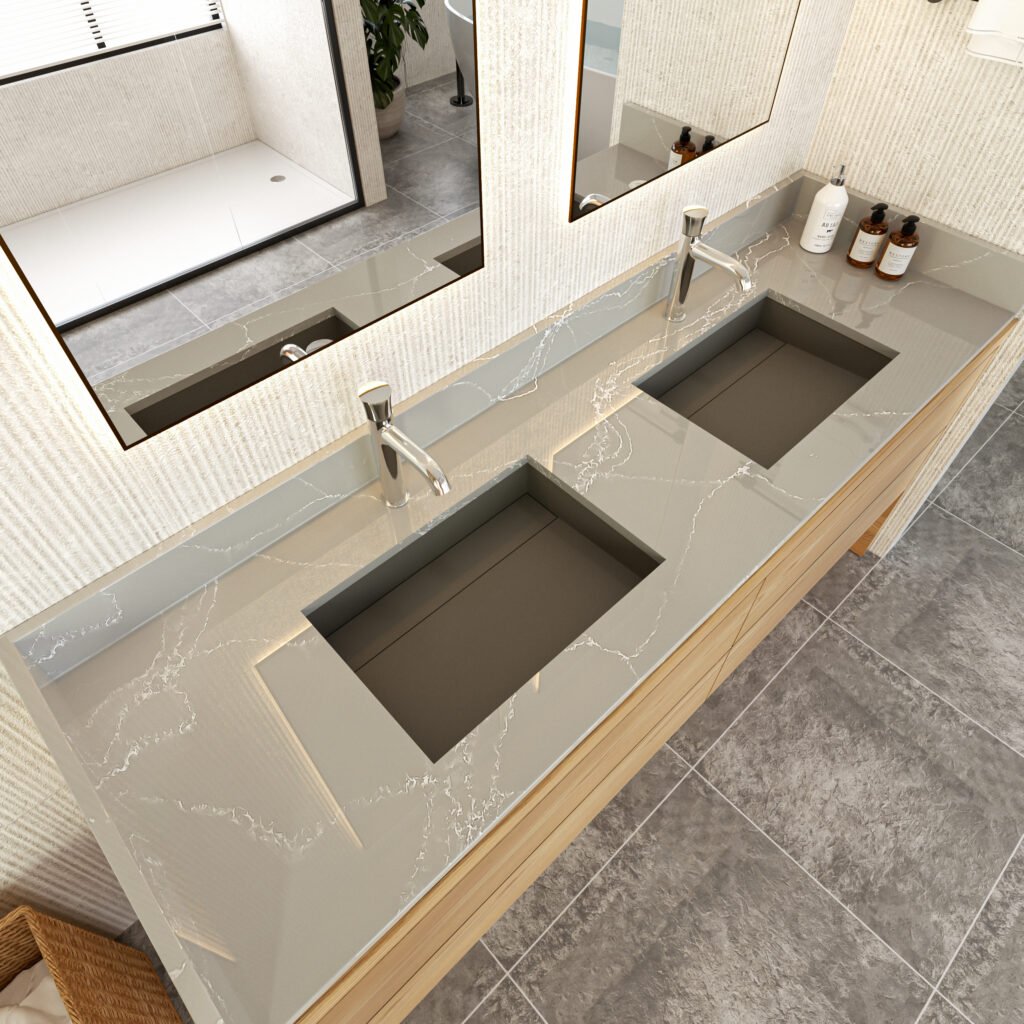
Since the solid surface is completely homogeneous, it can be heated and shaped to create integrated sinks with fully seamless joins. Due to this distinctive feature, it is a favorite among designers. It gives a modern aesthetic look and is easy to clean as well. For contractors who are looking for a solid surface vanity top supplier, this type of material is widely used. Minor damage can be repaired easily and sanded out, restoring the surface to a new condition.
Key features of solid surface vanity tops are:
- Fully repairable for scratches
- Integrated seamlessly with basins and wall panels
- Molded into custom curves or unique designs
- Available in matte, gloss, and textured finishes
- Available in many colors with consistent color on the surface
Comparison between Quartz vs Solid Surface Vanity Top
The table below tells you the key differences between quartz and solid surface vanity tops across performance and design categories:
| Feature | Quartz | Solid Surface | Winner |
| Durability | Very High | High | Quartz |
| Scratch Resistance | Excellent | Moderate | Quartz |
| Stain Resistance | Excellent | Good | Quartz |
| Seamless Design | Limited | Yes | Solid Surface |
| Repairability | Low | High | Solid Surface |
| Design Flexibility | Moderate | Very High | Solid Surface |
| Maintenance | Low | Low | Tie |
| Cost | Higher upfront material cost, especially for premium patterns | Moderate upfront cost, but value depends on customization level | Solid Surface |
| Heat Resistance | Moderate | Low | Quartz |
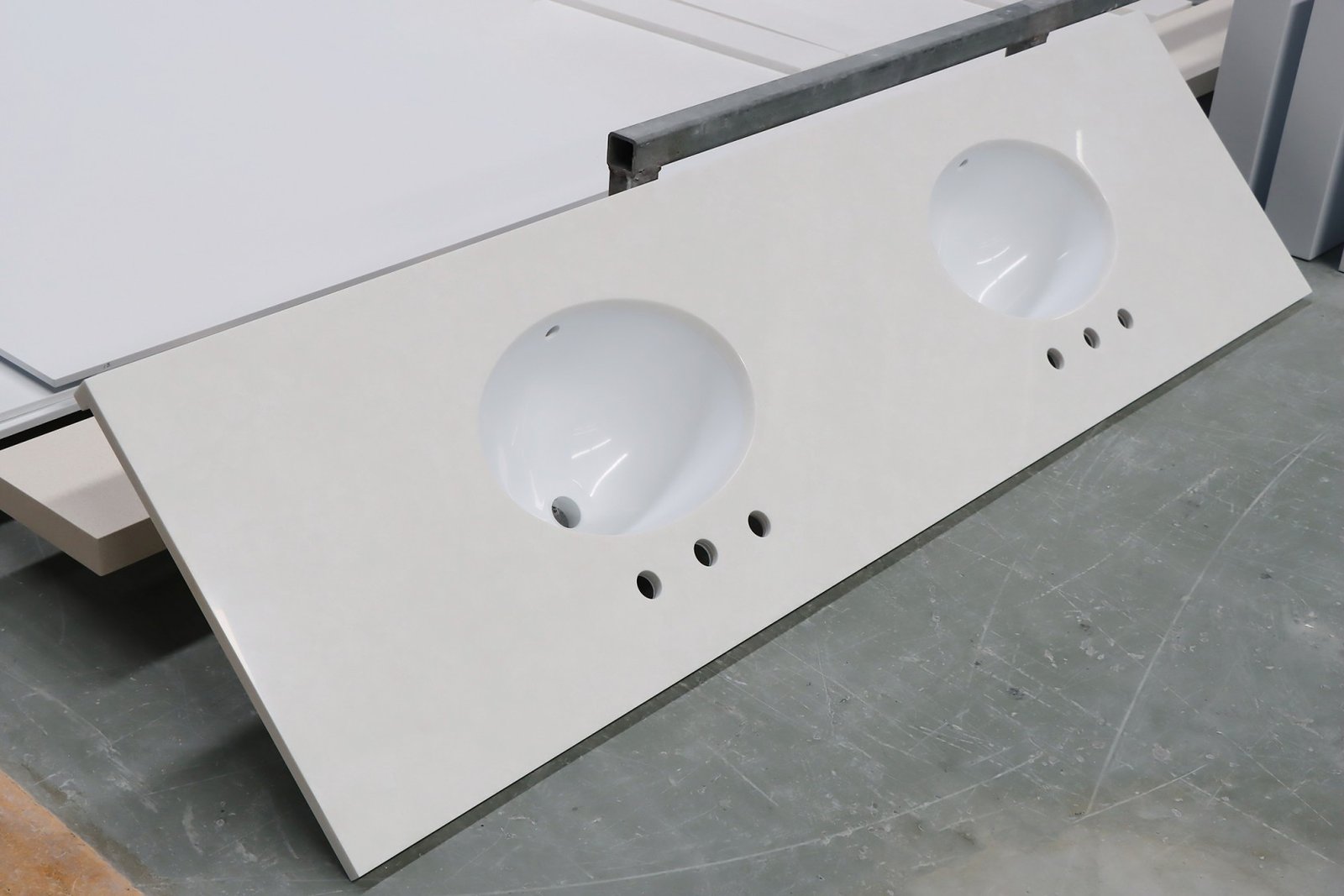
Durability Comparison
If you compare quartz vs. solid surface vanity tops in terms of durability, quartz is considered a better option. Due to its hardness, it is less prone to scratches and chipping. However, you should still avoid placing very hot items directly on the surface.
Solid surface, on the other hand, is suitable for everyday use but is more prone to scratches, especially from sharp objects. However, don’t assume that solid surfaces are inferior, as they offer a major advantage: the surface can be easily repaired. Minor scratches can be sanded out, restoring the surface to its original condition.
For highly busy bathroom settings, quartz is often the better choice because of its superior durability. Solid surface, however, remains a practical option since any surface damage can be repaired and restored.
Maintenance Comparison
Quartz and solid surface vanity tops are both low-maintenance options for bathroom applications. Neither material requires sealing, and both can be easily cleaned with mild soap and water. Because of this, they are often preferred over marble and granite, which require extra care to prevent damage from strong acidic cleaners.
These basin tops are also resistant to stains of hair dye, makeup, and other cleaning agents. Any spills can be easily wiped off the surface. Both materials are easy to clean, but only solid surface can typically be refinished to repair minor scratches or surface damage.
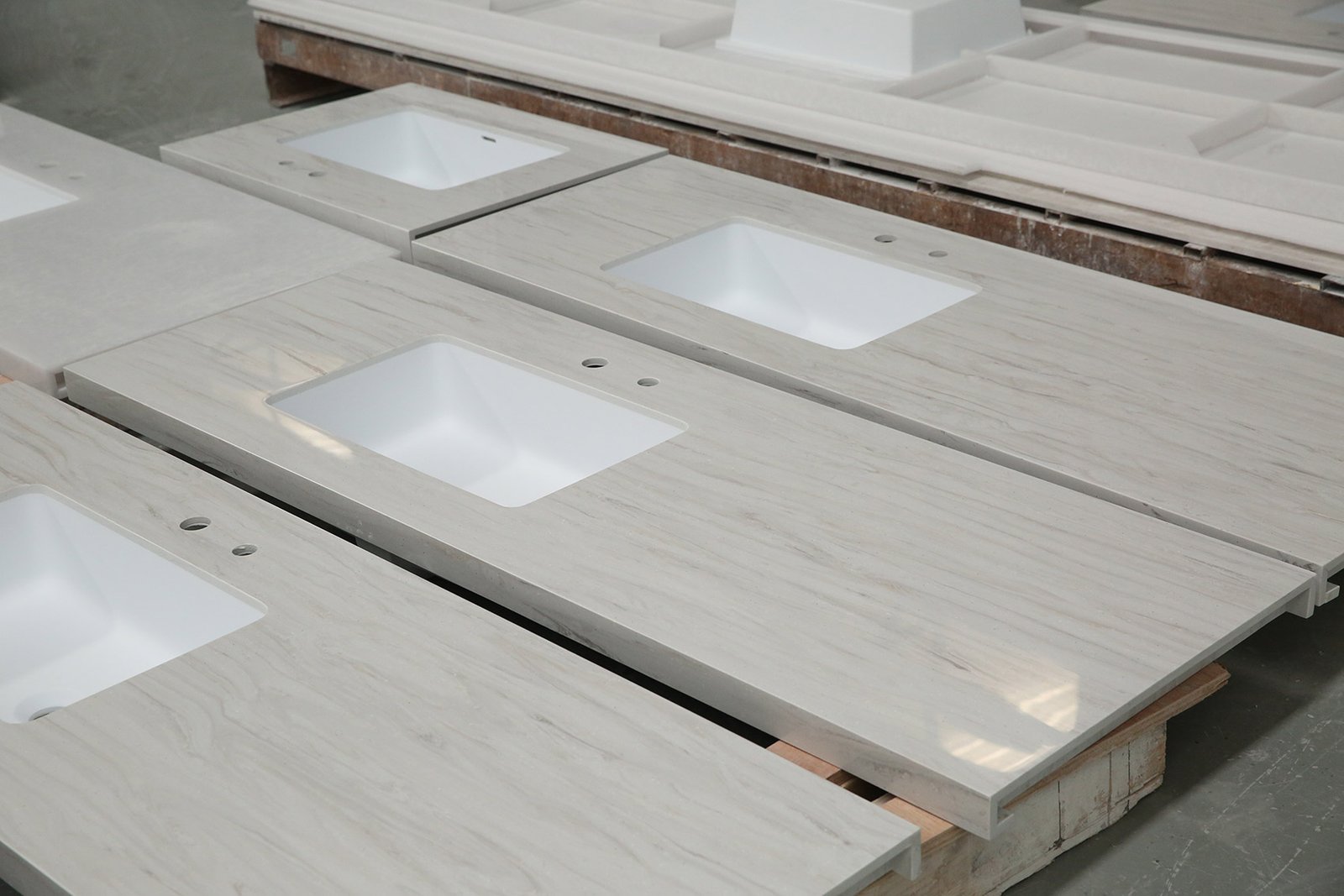
Design Flexibility
Designers and architects need creative designs, and solid surface basins offer a wide range of patterns. Since they can be easily shaped and molded, custom-made into different shapes, edges, and curves with fully integrated basin designs, they are widely preferred by designers. Hence, without any visible joints, the basin looks classy and premium, and seamless bathroom countertops are highly sought after.
On the other hand, quartz is available in many colors, but it is limited to standard basin cutouts only. It cannot be molded to custom shapes, so a solid surface is a much better choice for customized designs.
Fabrication and Installation Considerations for Custom Hotel Vanity Projects
Choosing the right vanity top material requires considering important factors before making a final decision. Fabrication flexibility, installation complexity, integrated sink compatibility, and long-term repair practicality are some factors that are considered important, especially for commercial projects.
Fabrication Flexibility
Solid surface basin tops are the best when it comes to fabrication. Since the material of solid surface can be molded and shaped to meet custom requirements. Hence, fabricators can create more customized countertops with unique edge profiles, which is a significant benefit for large hotel bathrooms.
Since quartz is a rigid material, it must be cut and finished by specialized fabricators. Quartz does not allow thermoforming, so every edge and cutout should be factory-finished, which reduces flexibility during the installation phase.
Installation Complexity
Quartz slabs are quite heavy and require professional installation with suitable support. For large hotel projects, there are more labor expenses leading to extended on-site installation. For Quartz, there is less opportunity for last-minute design changes, as accurate templating must be finished before fabrication.
Whereas solid surface materials are much lighter than quartz and can be cut and assembled on-site easily, with a better installation process. The seams in solid surfaces are chemically bonded and smoothed out. making them nearly invisible, giving a more seamless look.
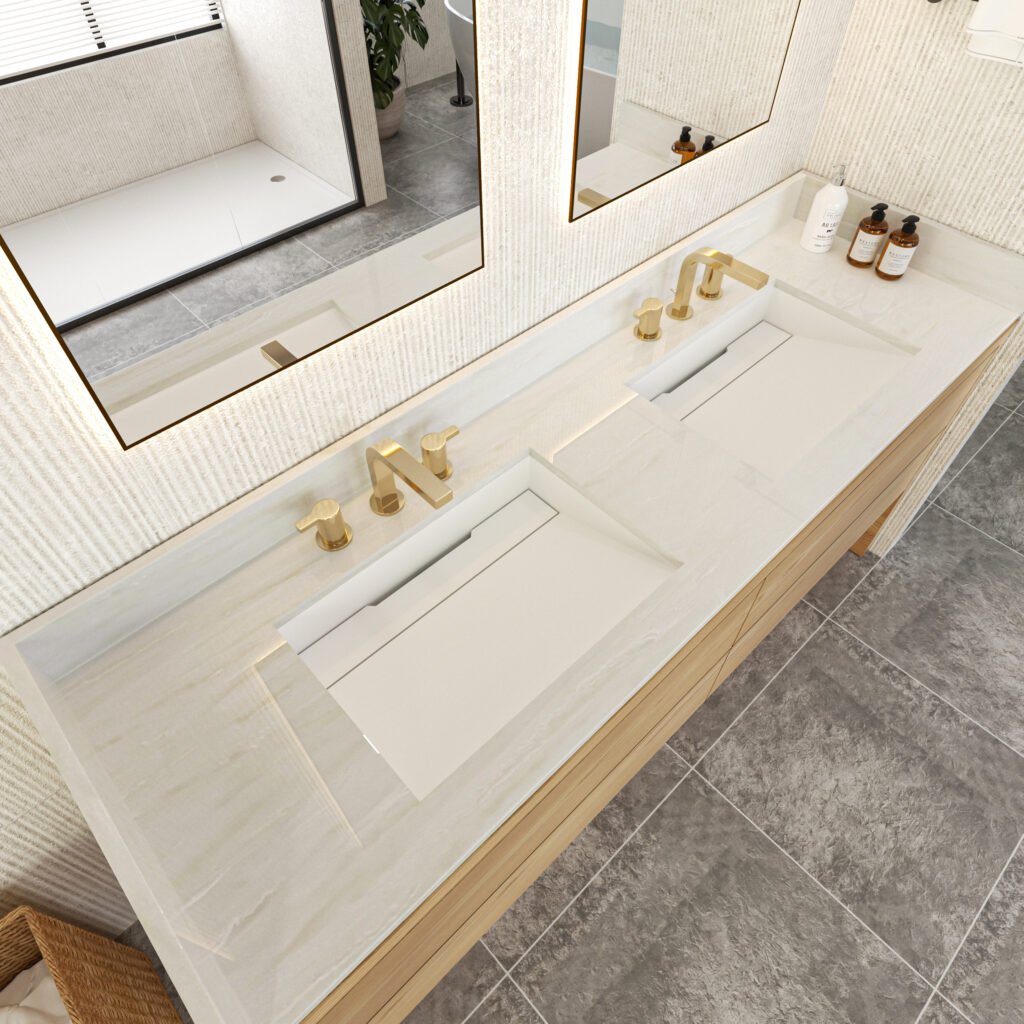
Integrated Sink Compatibility
Solid-surface basins are widely used in hospitality projects, as they have the ability to integrate sinks directly into the countertop. The basin and the vanity top can be made as a single unit, eliminating joints that can collect bacteria over time. This is one of the major hygiene and aesthetic advantages of hotel bathrooms that demand a premium finish.
Whereas quartz vanity tops require an undermount or drop-in sink, so there will always be a visible joint between the sink and the countertop. This type is widely used but does not have the visual appearance of solid surfaces.
Replacement and Repair Practicality
In individual vanity units, the need to replace and repair is much greater than in solid surfaces, as minor scratches and stains can be fixed well in solid-surface basins. The scratches can be buffed out easily without the need to replace the entire unit. This has long-term benefits over other types.
Quartz, while more scratch-resistant under normal use, is difficult to repair if it gets damaged. Chips, cracks, or deep scratches are typically permanent, and the need to replace the entire unit is more likely. So in large hotel projects, this is an important cost consideration.
Which Material Should You Choose?
Both quartz and solid surface vanity tops have their own advantages, and the right choice depends on the priorities of your project. If you want a bathroom vanity that offers high durability, excellent hygiene, and minimal maintenance, quartz is often the better option. Its hardness and non-porous surface help it withstand years of regular use.
However, if your project requires seamless design, integrated basins, or custom shapes, a solid surface vanity top is usually the better choice. Its ability to be molded into unique forms and repaired if scratched makes it particularly valuable for creative design projects.
For many designers and architects, the final decision between quartz vs solid surface vanity tops ultimately comes down to the project’s design vision and functional requirements. Understanding the strengths of each material helps ensure that the selected vanity top delivers the right balance of durability, aesthetics, and long-term performance.
Industry Perspective: Choosing the Right Vanity Top for Large-Scale Projects
Selecting the right vanity top material may look easier, but it is a tedious task. Across luxury resorts, business hotels, and large commercial hospitality developments, the decision between quartz and solid surface goes beyond aesthetics; it is about long-term performance, design consistency, and reliable delivery.
At KingKonree (KKR), we have supplied bathroom solutions for some of the world’s most recognized hospitality brands, including St. Regis, Waldorf Astoria, Park Hyatt, Six Senses, Mandarin Oriental, and many more across Marriott, Hilton, IHG, Hyatt, and Accor groups.
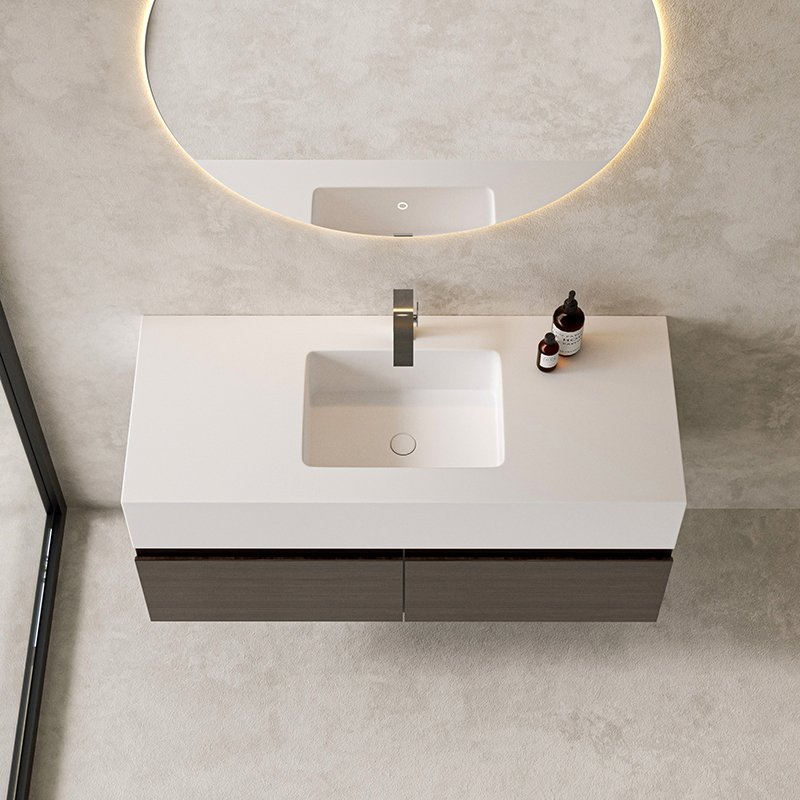
Through these projects, it can be demonstrated that design vision and material selection must align from the start. Solid surface has remained a preferred choice in hospitality environments where seamless integrated basins, custom shapes, and a premium finish are essential.
KKR supports projects with engineering-level customization from integrated sink basins and curved countertops to unique stone-inspired textures backed by stable manufacturing capacity and strict quality control. For designers seeking both material expertise and a trusted manufacturing partner, KKR delivers the experience and capability to bring any bathroom vision to life.
Conclusion
Choosing the best material for a bathroom vanity top does not have to be complicated. Quartz excels in durability, hygiene, and low maintenance, while solid surface stands out for its seamless bathroom countertop advantages, design flexibility, and repairability. By weighing these factors against your project’s specific needs, you can confidently select the material that will deliver the best performance, aesthetics, and long-term value.
Whether you think of choosing quartz or the seamless versatility of solid surface, partnering with the right solid surface vanity top supplier will help you in achieving a finish that truly elevates your bathroom design.
Frequently Asked Questions (FAQs)
Q1. What is the key difference in the quartz vs solid surface vanity top debate?
In the quartz vs solid surface vanity top comparison, quartz generally performs better in terms of hardness and scratch resistance, while solid surface offers greater design flexibility and easier repairability.
Q2. Which is the best material for a bathroom vanity top in high-traffic environments?
Quartz is widely considered the best material for bathroom vanity tops in busy spaces. Its hardness, non-porous surface, and superior stain resistance make it a reliable, low-maintenance choice for both residential and commercial bathrooms.
Q3. What are the seamless bathroom countertop advantages of solid surface?
The seamless bathroom countertop advantages of solid surface include fully integrated sink basins, invisible joins, and a sleek, hygienic finish. Without visible seams or grout lines, the vanity looks premium, is easier to clean, and feels refined.
Q4. Can a solid surface vanity top be repaired after scratches or surface damage?
Yes. One of the greatest benefits of a solid surface vanity top is its repairability. Minor scratches and surface damage can be sanded and refinished, while restoring the surface to new condition, unlike quartz, where damage is permanent.
Q5. What should I look for when choosing a solid surface vanity top supplier?
When selecting a solid surface vanity top supplier, prioritize proven manufacturing experience, engineering-level customization capability, stable production capacity, and a strong portfolio of hospitality or residential projects, ensuring consistent quality, reliable delivery, and the right material expertise for your project.