In the hospitality industry, bathroom walls come into constant contact with moisture. Bathrooms are used by multiple people daily and are cleaned with harsh chemicals just as often.
While enduring those conditions, hotel bathroom walls must still be able to maintain a clean and modern appearance.
Poor material choices can cause serious maintenance issues, water damage, and higher long-term costs. For those reasons, selecting the right hotel bathroom wall materials is an important part of any hospitality development.
To prevent these issues, developers and project managers must carefully evaluate which materials are best suited for high-traffic bathrooms.
To help you make the best choice, in this article, we will explore the most commonly used materials for hotel bathroom walls. We will also compare their performance and look at why certain options are becoming more widely used in modern hotel projects.
Materials Used in Hotel Bathroom Walls
In the market, you can find a number of different materials that are commonly chosen for hotel bathroom walls. These options are popular because they offer different benefits depending on durability, installation requirements, and design preferences.
The materials that are most commonly used include:
- ceramic tiles
- porcelain tiles
- natural stone wall finishes
- waterproof bathroom wall panels
- cultured marble wall panels
- solid surface wall panels
To choose the right material, you must take into consideration not only the type of hotel, but also the budget and the level of maintenance required.
Ceramic and Porcelain Tiles
For decades, developers have used ceramic and porcelain tiles as their go-to options for hotel bathroom walls. These materials have a hard surface and, as such, are quite durable.
They are made from clay and mineral compounds that are shaped and fired at high temperatures.
Porcelain tiles are denser and less porous in comparison to standard ceramic tiles. This makes porcelain tiles more resistant to water and wear.
However, both materials are used more than others because they are durable, widely available, and suitable for a range of bathroom designs.
One drawback is that tiled surfaces include grout lines. These lines are known for trapping dirt, moisture, and bacteria. As a result, over time, grout may become discolored or require more frequent maintenance, especially in high-traffic hotel environments.
Natural Stone Wall Materials
Natural stone materials such as marble and granite are often used in luxury hotel bathrooms. These materials are cut from natural stone blocks and polished to create a high-end finish.
Stone walls are often used in these high-end projects because they provide a premium appearance that tends to enhance the overall design of a hotel bathroom.
However, natural stones are quite porous, and typically they have to be sealed in order to prevent damage and hygiene issues relating to moisture and staining.
In addition, they need more frequent maintenance, and for that reason, they aren’t the best wall materials for hotel bathrooms in low-budget projects. In fact, natural stone is more suited and commonly used in upscale or boutique hotels.
Waterproof Bathroom Wall Panels
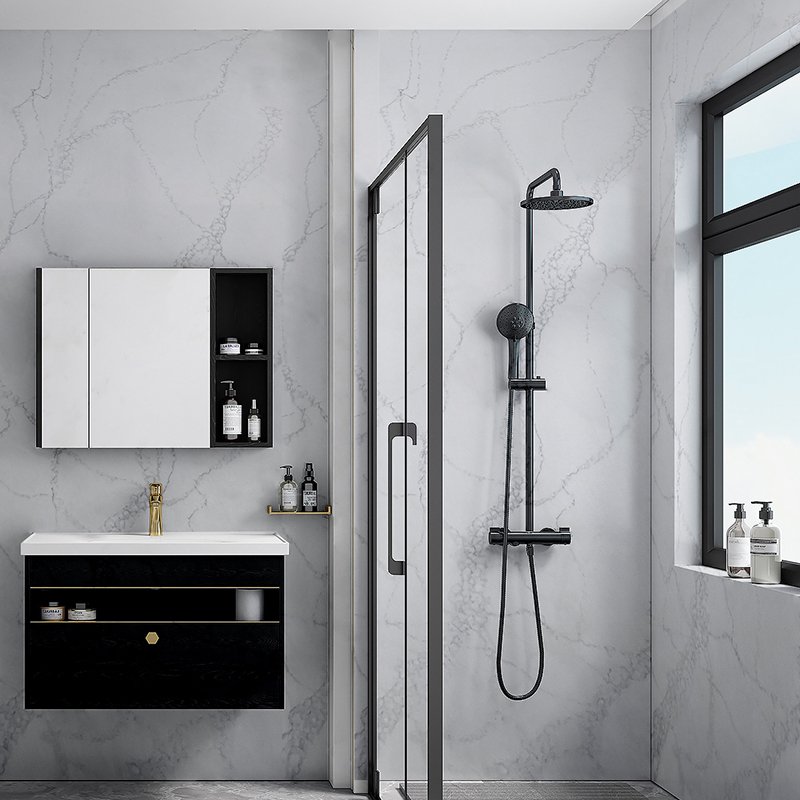
One other bathroom wall material that has seen a rise in popularity is waterproof bathroom wall panels. More and more hotel developments are opting to use them in modern projects.
These panels are manufactured from composite materials that are designed to resist water penetration and simplify installation.
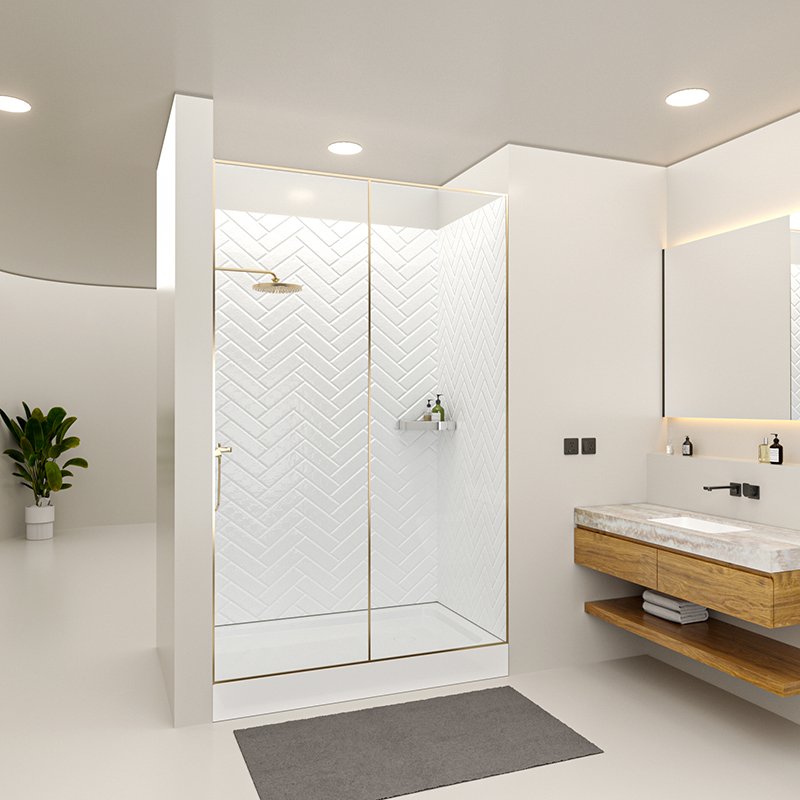
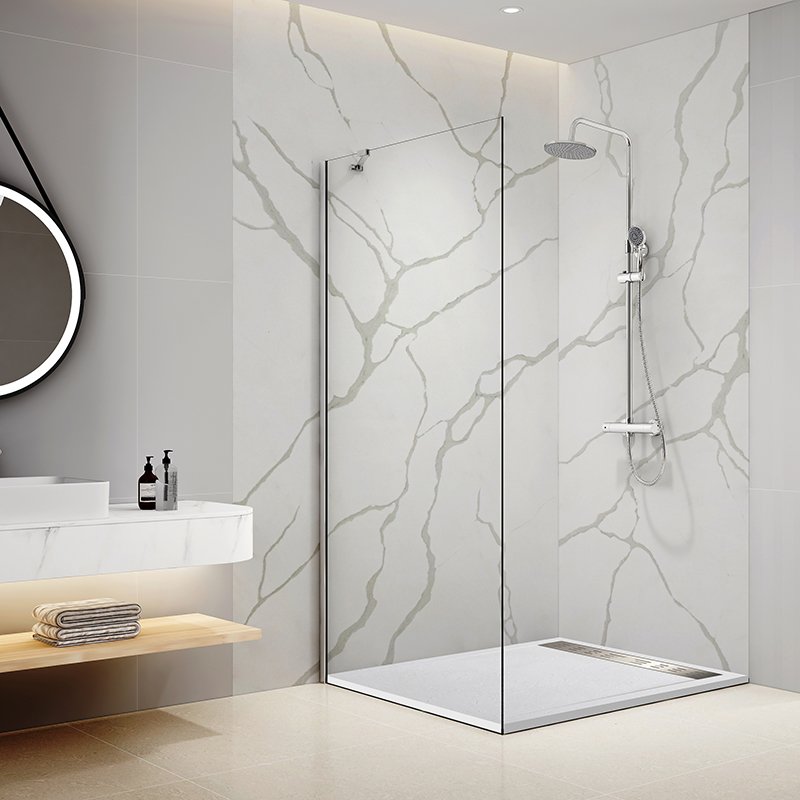
Furthermore, unlike tiles, wall panels such as these are installed as large sheets, and this helps to reduce the number of joints, eliminating the need for grout. As such, they are much easier to clean and maintain.
Many developers prefer working with a waterproof bathroom wall panel supplier because these systems can help to reduce the overall installation time and save on long-term maintenance costs.
Solid Surface Wall Panels
Solid surface shower wall manufacturers use a combination of resins and mineral fillers to create a dense and non-porous material. These panels are commonly used in hotel bathrooms because they offer durability, hygiene, and design flexibility.
One of the main advantages of solid surface shower wall panels is their seamless appearance.
Because they can be installed with minimal joints, they reduce areas where moisture and bacteria can accumulate.
In addition, solid surface panels are resistant to stains and can maintain their appearance over time, even with frequent cleaning.
This makes them a practical option for high-traffic hospitality environments.
Cultured Marble Wall Panels
Cultured marble wall panels are another commonly used material in hotel bathroom projects. These bathroom marble wall panels are made by blending various crushed natural stones with polyester resin. That mixture is then molded into panels and finished with a protective gel coating.
Cultured marble wall panels are non-porous and, as such, are able to provide good resistance to moisture. This moisture-resistance feature makes these wall panels extremely suitable for bathroom environments. In addition, cultured marble offers developers a nice balance between cost and performance. For that reason, it is often chosen, especially in large-scale hotel developments.
Nevertheless, when compared to solid surface wall panels, cultured marble panels may be more prone to surface wear over time. Yes, it provides a smooth and attractive finish. But it is generally less flexible in terms of seamless design and repairability.
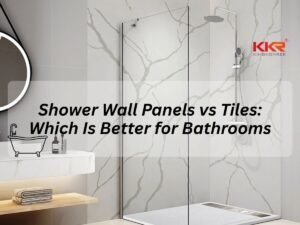
Shower Wall Panels vs Tiles
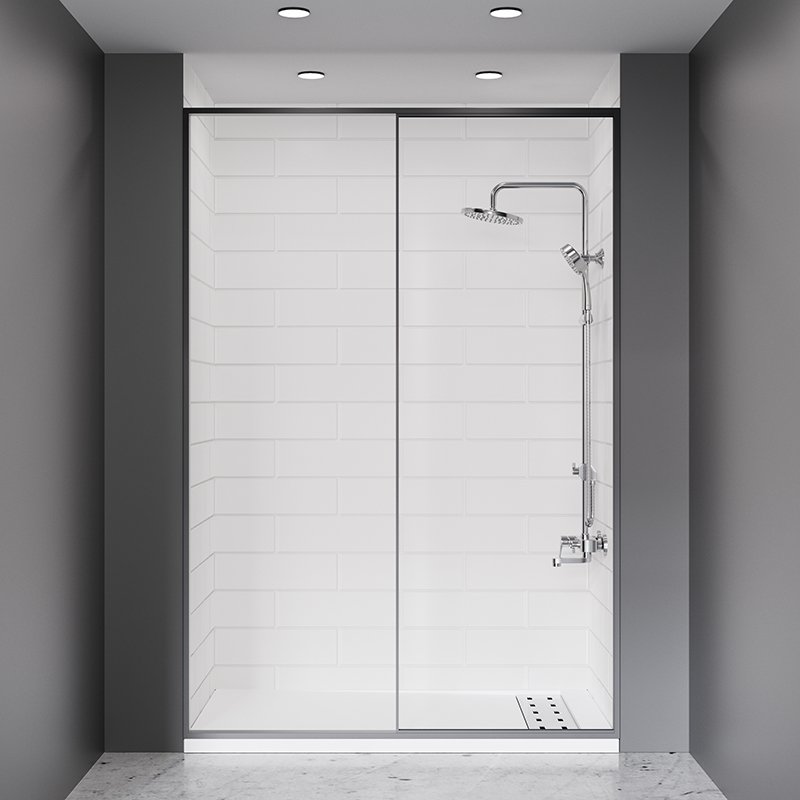
When comparing shower wall panels vs tiles, there are several key differences that play a role in their performance across various hotel bathrooms.
| Feature | Wall Panels | Tiles |
| Installation | Faster and simpler | More time-consuming |
| Joints | Minimal or seamless | Multiple grout lines |
| Maintenance | Low maintenance | Requires grout cleaning |
| Hygiene | Fewer areas for bacteria | Grout can trap dirt |
| Durability | High (depending on material) | High but grout may wear |
Cultured Marble vs Solid Surface Wall Panels
When comparing cultured marble and solid surface wall panels, both materials offer advantages for hotel bathroom applications.
| Feature | Cultured Marble | Solid Surface |
| Composition | Crushed stone + resin | Resin + mineral fillers |
| Surface Type | Gel-coated finish | Solid, homogeneous material |
| Durability | Good | High |
| Repairability | Limited | Easily repairable |
| Design Flexibility | Moderate | High (seamless designs) |
| Maintenance | Low | Low |
| Appearance | Glossy, stone-like | Matte or glossy, modern |
While both materials are suitable for environments that have high traffic, solid surface wall panels are often the preferred choice for high-end projects. Developers tend to choose solid surface because of its seamless appearance and ability to be repaired.
However, cultured marble remains a highly practical option for the projects that require a balance between cost and durability.
Durability and Hygiene Requirements
Hotel bathroom walls come under constant use and are exposed to high levels of moisture and repeated contact. In addition, these commercial bathrooms are cleaned quite frequently, using harsh chemicals.
Therefore, they must meet strict durability and hygiene standards. As a developer, you should select materials that can withstand those conditions and can do so without deteriorating or compromising hygiene standards.
Resistance to Moisture
In hotel bathrooms, it is only natural that the walls will be wet a lot of the time. Therefore, the wall materials used must be able to resist water penetration.
If not, the wall will be susceptible to long-term damage. Non-porous materials perform better in this regard.
Surfaces that do not properly prevent moisture penetration may facilitate the growth of mold and mildew, which might lead to structural damage over time.
For this reason, waterproof or highly water-resistant materials are essential for maintaining the integrity of hotel bathroom walls.
Ease of Cleaning
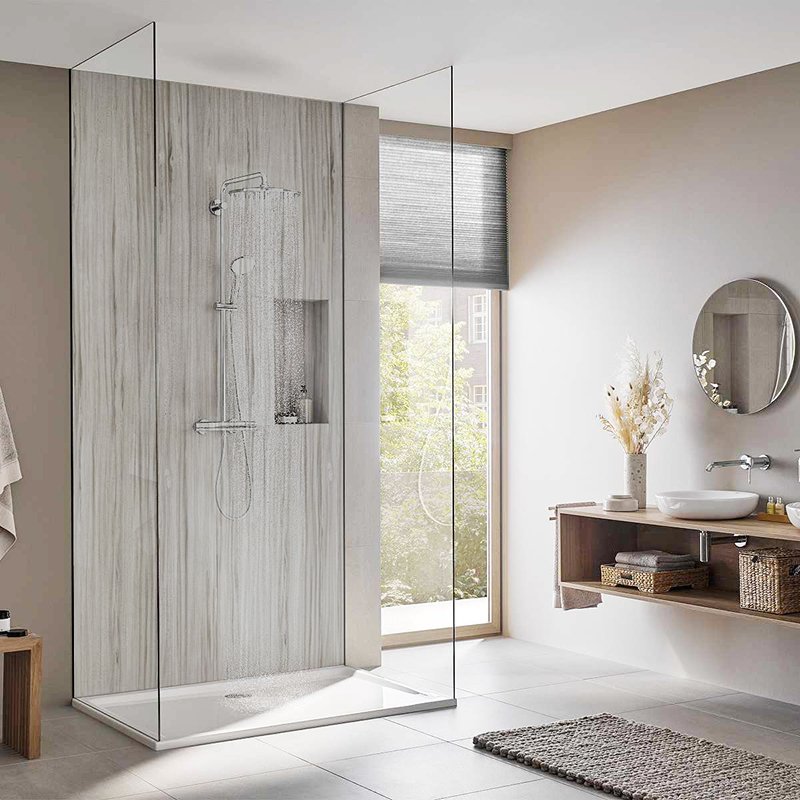
To help maintain the quality of the walls and prevent hygiene-related issues, the materials used for bathroom wall surfaces should allow staff to clean quickly and effectively.
This is very important in hotel environments because the housekeeping teams are typically tasked with cleaning multiple rooms within a limited timeframe.
Therefore, the materials that simplify the cleaning process can help to improve efficiency across the housekeeping department and will help hotel staff to maintain high sanitation standards.
Long-Term Performance
Even though hotel bathroom walls are subjected to repeated exposure to cleaning chemicals and daily use by guests, the wall materials are still expected to maintain their appearance over time.
Additionally, in hospitality settings, the bathroom walls must be able to resist discoloration, surface wear, and damage caused by constant cleaning.
When you choose materials that have the ability to retain their finish and structure over time, you will help the hotel to reduce maintenance costs.
This also ensures a consistent appearance across all the hotel rooms in your portfolio.
Installation Considerations
Installation plays a significant role in both the project timelines and long-term performance.
Installation Time
In comparison to ceramic and porcelain bathroom wall tiles, wall panels can often be installed more quickly because they cover larger surface areas.
Labor Requirements
Installing tiles will require more labor due to all the cutting, placement, and grouting that the entire process requires. Wall panels simplify this process.
Structural Compatibility
Some materials are heavier than others and may need some additional support. Natural tone is one such material due to its weight, while panels are generally lighter and easier to handle.
Why Wall Panels Are Gaining Popularity
More hotel developers are choosing to use wall panel systems over traditional porcelain or ceramic bathroom tiles. We believe that this shift is a result of the practical and operational advantages that bathroom wall panel materials provide.
If you recall, wall panels can significantly reduce the installation time, which will help to keep the projects on schedule.
Furthermore, they also simplify maintenance by eliminating grout lines that tend to be the most difficult areas to clean.
In addition, modern wall panel systems offer a clean and uniform appearance. This aesthetic is more likely to align with the contemporary hotel design trends that most developments are looking for.
With these and other benefits, wall panels have become an attractive option for both new developments and renovation projects.
Bottom Line
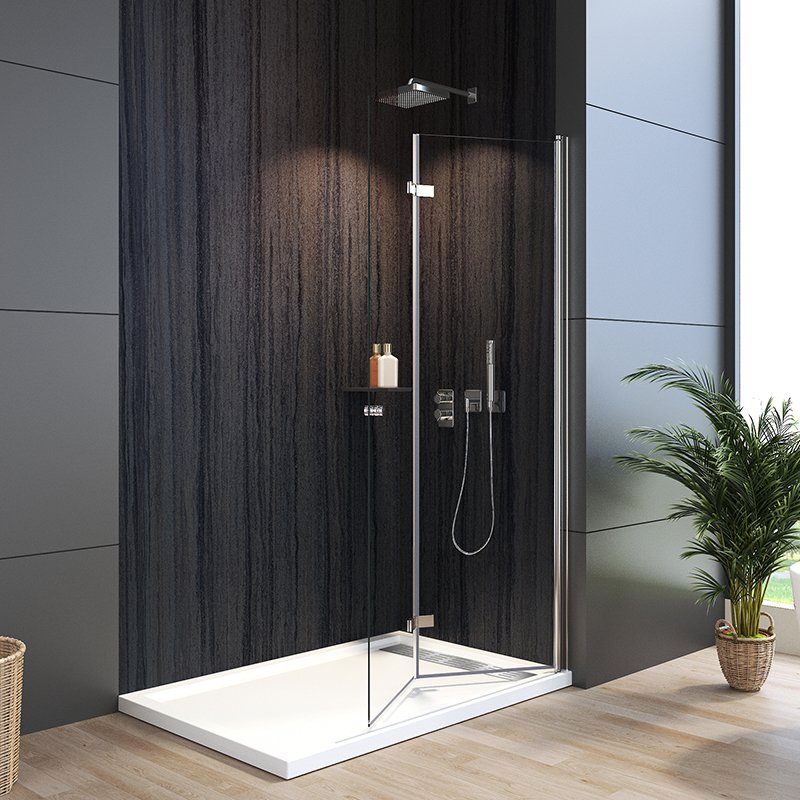
It’s not an easy choice when selecting the right hotel bathroom wall materials. This is a step that requires careful consideration. Each material has a range of benefits and varies in durability, hygienic qualities, installation, and long-term maintenance requirements.
Since hotel bathroom walls are constantly being exposed to moisture and cleaning, they must be made from durable materials. Yet, regardless of their constant exposure and use, they must also be able to maintain a clean and professional appearance.
As a result, wall panels such as solid surface and cultured marble are becoming increasingly popular as they provide these and other benefits.
On the other hand, while porcelain and ceramic tiles and natural stone may still be suitable for certain projects, there has been a shift toward panel-based solutions in modern hospitality developments.
As a developer, when you choose the best hotel bathroom wall materials and work with a reliable hotel bathroom wall material supplier, you create bathroom environments that are not just durable but also hygienic and visually consistent, providing peace of mind to your client and their guests.
Frequently Asked Questions
What are the best materials for hotel bathroom walls?
The materials that are most commonly used include ceramic tiles, porcelain tiles, natural stone wall finishes, waterproof bathroom wall panels, and solid surface wall panels.
Choosing the right option depends on durability, installation requirements, design preferences, and the level of maintenance required.
Are wall panels better than tiles for hotel bathrooms?
When comparing shower wall panels vs tiles, wall panels are installed as large sheets, which helps to reduce the number of joints and eliminates the need for grout.
As such, they are much easier to clean and maintain, while tiled surfaces include grout lines that can trap dirt, moisture, and bacteria.
Why are wall panels becoming popular in hotels?
More hotel developers are choosing to use wall panel systems because they reduce installation time, simplify maintenance by eliminating grout lines, and offer a clean and uniform appearance that aligns with modern hotel design trends.
What should developers consider when choosing wall materials?
Developers must carefully evaluate which materials are best suited for high-traffic bathrooms.
It is important to consider durability, hygiene, installation, and long-term maintenance, as well as the ability of the material to withstand constant exposure to moisture and cleaning.