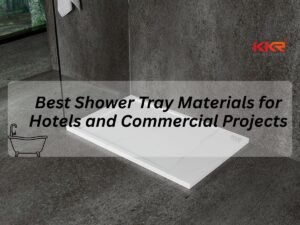
The shower tray is seen as a small detail when you are designing a hotel bathroom, but it is the most important part of the whole room. It faces daily heavy use, constant moisture, repeated cleaning with strong chemicals, and the expectations of hundreds of guests every year. Choosing the wrong shower base material can lead to early cracking, staining, and expensive replacements.
This blog compares the four main commercial shower tray materials with factors that matter most in hotel and commercial settings. By the end of it, you will know which shower tray material suits your project type and budget.
What Makes a Good Commercial Shower Tray Material?
Before comparing individual materials, it is important to understand what commercial projects require from a shower tray. Residential trays are used once or twice a day by the same people. A hotel shower tray can be used five to ten times per day by different guests, cleaned with industrial products every morning, and expected to look brand new for years.
The four qualities that matter most in commercial shower tray selection are the following:
- Durability– Whether the material can handle heavy daily use or not.
- Slip resistance -Whether the surface provides enough grip and meets accessibility regulations.
- Hygiene – The material should be non-porous so bacteria, mould, and staining cannot penetrate it.
- Maintenance – How easily surface damage can be repaired without replacing the entire tray.
These four factors are important to keep in mind when selecting the right shower base material for any hotel project.
Solid Surface Shower Trays – The Best Choice for Hotels
Solid surface material is made from a blend of natural minerals and high-performance resins. It is the material of choice for luxury hotels, boutique properties, and any commercial project where appearance, longevity, and hygiene are the top priorities.
- Durability: Solid surfaces are non-porous, dense, and highly resistant to impact. It does not crack easily. Even after years of use in a commercial space, it holds its shape and surface finish.
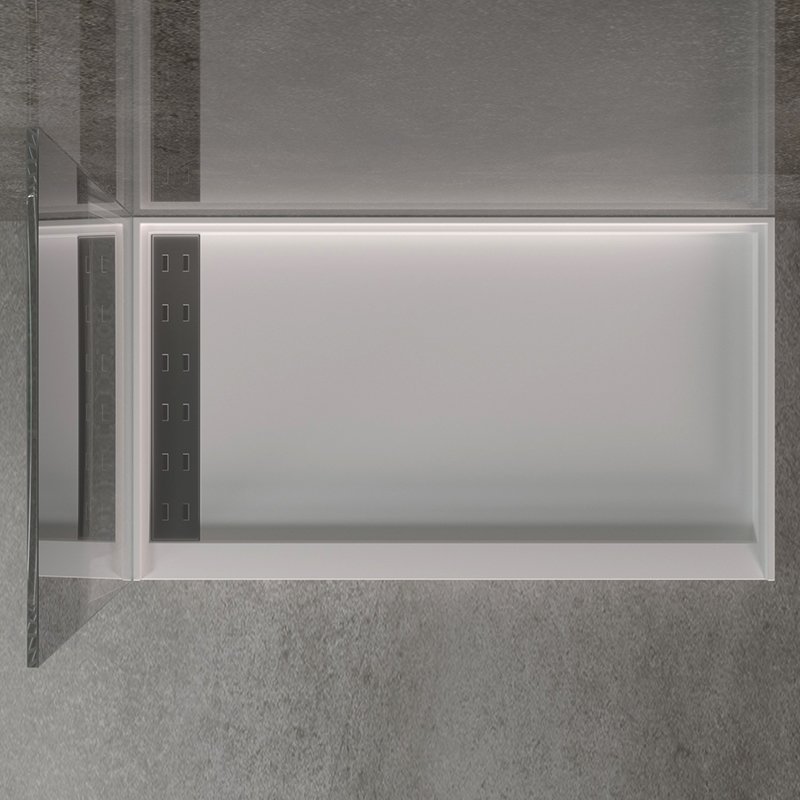
- Slip resistance: Solid surface trays can be made with built-in anti-slip textures. This makes them safe for guests while giving a smooth, refined finish suited to luxury hotels.
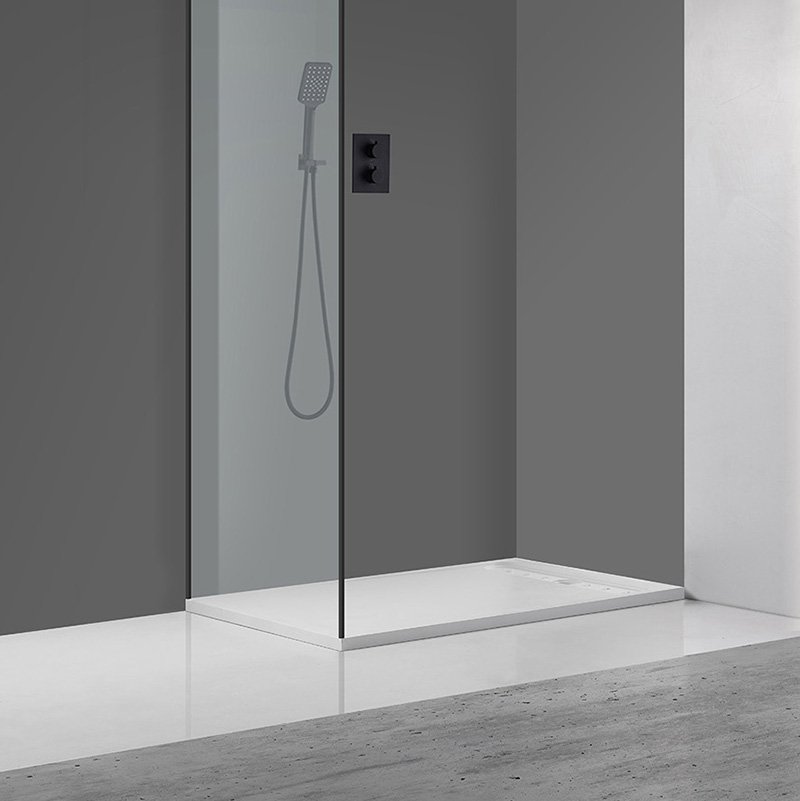
- Hygiene: A solid surface is completely non-porous and manufactured as a single seamless unit, with no grout lines or joins, giving bacteria and mold nowhere to settle. This makes it the most hygienic shower tray material available and cuts down housekeeping time in hotels.
- Maintenance: Minor scratches and surface marks can be sanded and polished back to a smooth finish. So the tray can be restored to its original finish without full replacement, keeping long-term costs low.
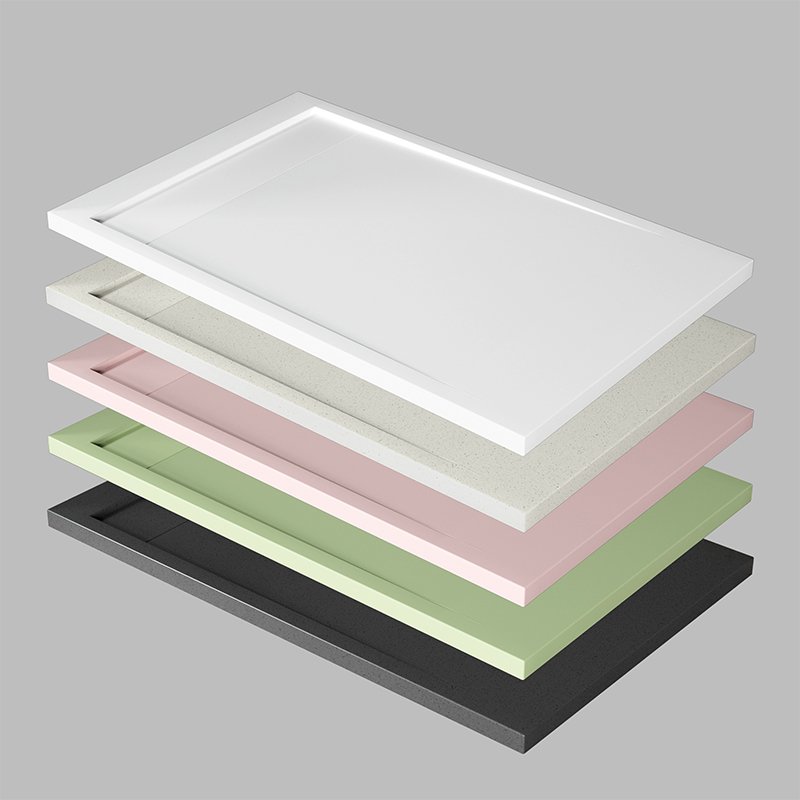
- Customization: Solid surfaces can be made in any size, shape, or color. This makes it ideal for hotel groups that want a consistent look across multiple properties where standard sizes do not fit the floor plan.
KKR, a leading solid surface manufacturer, has supplied solid surface shower trays and bathroom products to over 400 hotel projects worldwide, including Marriott, Waldorf Astoria, Six Senses, Mandarin Oriental, and Park Hyatt. This level of commercial experience means consistent quality, reliable lead times, and the manufacturing capacity to supply large hotel developments on schedule.
Cultured Marble Shower Trays – A Classic Mid-Range Option
Cultured marble is made from a mixture of crushed limestone or marble dust and polyester resin. It is then finished with a clear gel coat on the surface. This type has been used in hotel and residential bathrooms for decades and remains a popular choice for its natural stone appearance in comparison to real marble.
Durability: Cultured marble is durable under normal hotel conditions. The gel coat surface can scratch and chip with heavy daily use. Once damaged, the exposed base material underneath is porous and very hard to restore.
Slip resistance: Standard cultured marble surfaces are relatively smooth and can become slippery when wet. Non-slip textures are available but less common, so check this carefully for accessible hotel rooms.
Hygiene: The gel coat gives cultured marble a non-porous surface that is easy to clean under normal conditions. However, once the surface is scratched, the exposed base material can hide bacteria and stains.
Maintenance: Cultured marble cannot be sanded and refinished once the gel coat is scratched or chipped. Replacement is often the more realistic long-term outcome.
Best for: They are best for mid-range hotels that want a marble look at a lower cost. Good for rooms with less use and where this material is common. It is better than acrylic, but not as strong as solid surface or stone resin.
Poly Marble Shower Trays – An Entry-Level Stone-Look Option
Poly marble, sometimes referred to as polymarble or polymer marble, is made from polyester resin combined with fillers and pigments to produce a marble-like appearance. It is lighter than cultured marble and stone resin and is positioned as a budget-friendly alternative to natural or cultured stone products.
Durability: Poly marble is less durable and can wear out faster in busy hotels. Regular cleaning with strong chemicals may cause fading, yellowing, and surface damage over time.
Slip Resistance: Polymarble surfaces are usually smooth and can become slippery when wet. Some options have texture, but slip resistance should be checked carefully, especially for safety and accessibility needs.
Hygiene: It has a non-porous surface at first, but over time it can degrade. Frequent use of cleaning chemicals may make the surface dull and reduce its overall hygiene performance.
Maintenance: Poly marble cannot be easily repaired if damaged. Scratches, chips, or discoloration are permanent, so replacement is often needed, which can increase long-term costs despite the lower upfront price.
Best For: Poly marble is suitable for budget hotels or low-use areas where cost is the main concern. It is not ideal for busy hotels or premium spaces requiring long-lasting materials.
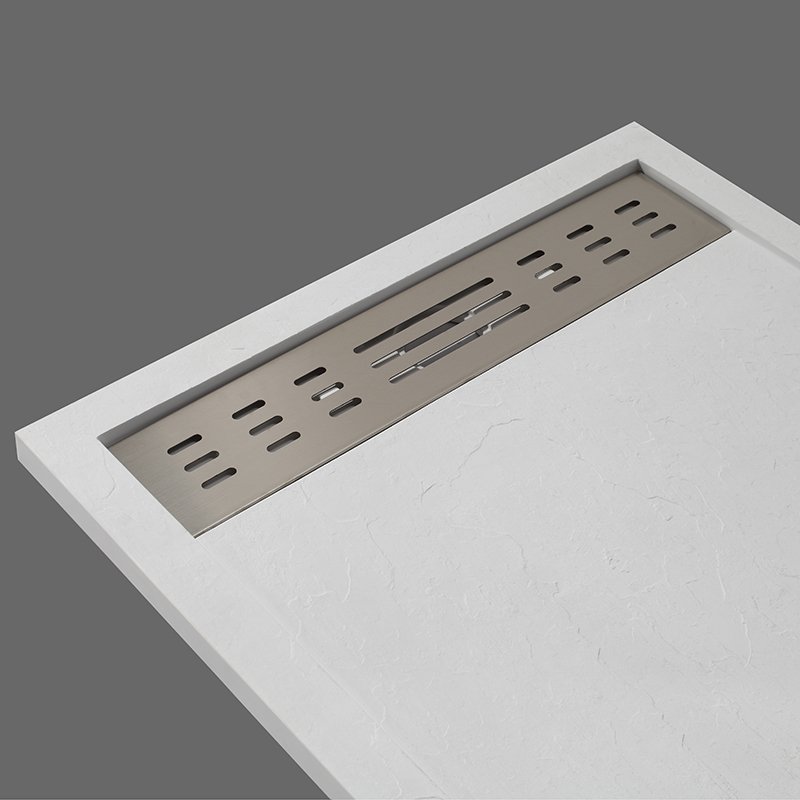
Acrylic Shower Trays – Budget-Friendly but Limited for Commercial Use
Acrylic is the most widely used shower base material in residential shower trays due to its low cost and light weight. In commercial settings, however, its limitations become clear quickly.
- Durability: Acrylic trays bend slightly when you stand on them. Over time, small cracks may appear, especially where many people use the shower every day. The surface also scratches very easily. Once an acrylic tray gets scratched or cracked, there is no way to fix it.
- Slip resistance: Standard acrylic surfaces are quite slippery when wet. Anti-slip coatings can be applied, but they wear off with frequent cleaning, making ongoing maintenance essential.
- Hygiene: Acrylic is non-porous, but scratches on the surface create tiny grooves where bacteria can build up. In a hotel where many guests use the shower every day, this can quickly become a hygiene problem.
- Best for: Budget hotels and serviced apartments where cost is the primary driver and trays are expected to be replaced on a regular cycle. Not recommended for mid-market or luxury hotel specifications.
Stone Resin Shower Trays – A Solid Mid-Market Option
Stone resin is made from a mixture of crushed stone and resin. It is heavier and more rigid than acrylic, giving it a more premium feel and better durability in commercial settings.
- Durability: Stone resin trays are strong, rigid, and resistant to flexing. They hold up well under regular hotel use and are significantly more durable than acrylic. However, they cannot be repaired if the surface is chipped or cracked.
- Slip resistance: Most stone resin trays have a naturally textured surface that provides good wet grip, making them a practical choice for accessible hotel rooms.
- Hygiene: Stone resin is non-porous and easy to clean with standard hotel cleaning products. It resists staining better than acrylic.
- Best for: Mid-market hotels, guest houses, and commercial properties that need a durable, good-looking tray at a reasonable price point. Stone resin is the most practical upgrade from acrylic for hotel refurbishment projects.
Ceramic Shower Trays – Traditiozqnal but Not Ideal for Hotels
Ceramic shower trays are made from fired clay with a glazed surface. They are heavy, hard, and have a traditional look that suits certain design styles.
- Durability: Ceramic is very hard but brittle. A heavy object dropped onto a ceramic tray can crack or chip it, and ceramic cannot be repaired. In a hotel environment where guests drop toiletry bottles and heavy luggage regularly, this brittleness is a real risk.
- Slip resistance: The glazed surface of ceramic trays can be very slippery when wet unless a specifically textured or anti-slip glaze is applied. This is a significant safety concern in commercial settings.
- Hygiene: The glazed surface is non-porous and easy to clean, but grout lines around the tray edges can harbor bacteria and require more intensive cleaning.
- Best for: Low-traffic residential bathrooms and certain heritage or traditional design projects. Ceramic is rarely the right commercial shower tray choice for modern hotel specifications.
Shower Tray Material Comparison Table
Here is the Shower Tray Material Comparison Table:
| Feature | Solid Surface | Stone Resin | Cultured Marble | Poly Marble | Acrylic | Ceramic |
| Durability | Excellent | Good | Good | Medium-low | Low | Medium |
| Slip Resistance | Excellent | Good | Medium | Medium-low | Poor | Poor |
| Hygiene | Excellent | Good | Medium | Medium-low | Medium | Medium |
| Repairable | Yes | No | No | No | No | No |
| Customization | Full | Limited | Limited | Limited | Very Limited | Very Limited |
| Lifespan (Hotel Use) | 15-20 years | 10-15 years | 8-12 years | 5-8 years | 5-7 years | 7–10 years |
| Best for | Luxury & All Hotel Types | Mid-market hotels | Mid-range hotels | Budget areas | Budget Hotels | Residential Only |
| Cost | Higher upfront | Mid range | Mid Range | Low | Low | Low-Mid |
Material Recommendations by Hotel Category
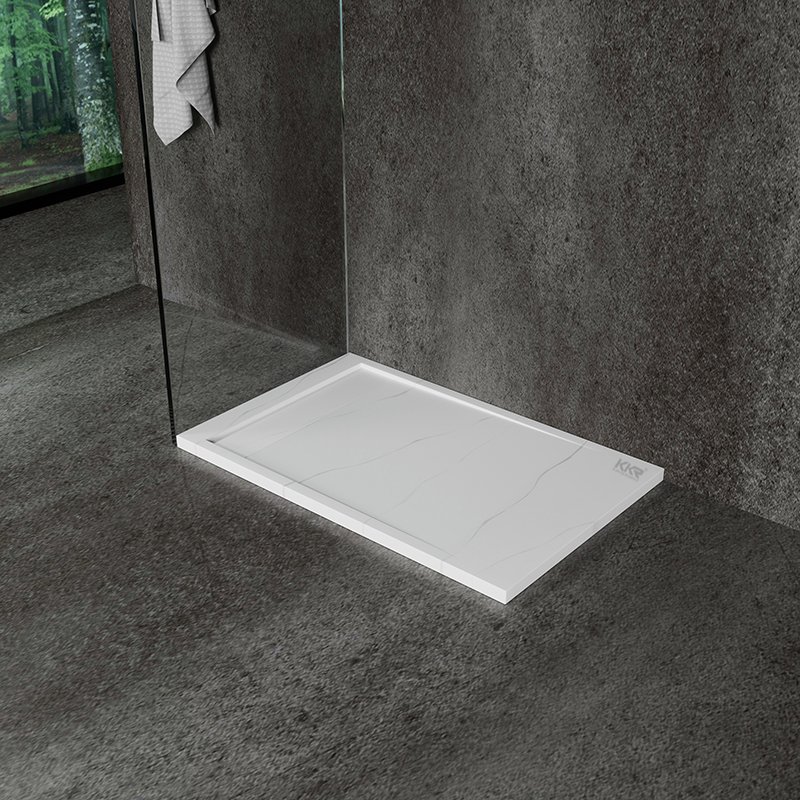
- Luxury and Boutique Hotels: Solid surface meets all the demands of aesthetics, hygiene, durability, and repairability. Walk-in showers with smooth, seamless floors and built-in slim drains are now the go-to choice for luxury hotels.
- Mid-Market Hotels: Stone resin is a smart choice for mid-range projects. It is stronger than acrylic, looks better, and the price fits a mid-range budget. Solid surface is also a strong option when the budget allows.
- Budget Hotels and Serviced Apartments: Reinforced acrylic is acceptable at this level, provided operators plan for a regular replacement cycle every five to seven years. Stone resin is a worthwhile upgrade if the budget stretches.
- Accessible Rooms: Solid surface or stone resin with built-in anti-slip texture and a zero-threshold level-access design. Both materials can meet accessibility regulations without compromising appearance.
Why Material Choice Matters More in Hotels Than Homes
In a residential bathroom, a shower tray is used by the same one or two people every day. If the surface scratches or discolors slightly after a few years, it is a minor inconvenience. In a hotel, that same tray is used by five to ten different guests daily, cleaned with strong products every morning, and judged by every single person who steps into it.
A tray that looks worn, stained, or scratched reflects directly on the guest experience and the hotel brand. This is why experienced hotel developers and procurement teams consistently specify solid surface or stone resin over acrylic, not because the upfront cost is lower, but because the total cost of ownership over a five- to ten-year period is significantly better.
Working With the Right Manufacturer for Commercial Projects
For hotel and large-scale commercial projects, the shower base material you choose is only part of the decision. The manufacturer you work with matters just as much.
A supplier with proven commercial experience can deliver consistent quality across hundreds of identical units, meet construction deadlines, provide technical support for custom sizes and finishes, and back their products with warranties that residential suppliers cannot offer.
KKR has supplied solid-surface bathroom products to many renowned hotels worldwide. Whether you are specifying 50 rooms or 500, working with a manufacturer that understands the demands of commercial procurement means your project runs on time, on budget, and to the standard your guests expect. That is the difference between a supplier and a commercial partner.
Conclusion
Choosing the right shower base material for a hotel or commercial project is a decision that affects guest experience, maintenance costs, and your brand reputation for years to come. Acrylic works for budget builds on short replacement cycles. Stone resin is a solid mid-market choice. But for any hotel that takes its guest experience seriously, from mid-market to ultra-luxury, solid surface is the material that delivers on every measure that matters.
If you are specifying shower trays for a hotel development, a serviced apartment block, or any large-scale commercial project, work with a manufacturer that has done it before at scale. KKR supplies solid surface shower trays and bathroom products to hotels worldwide, with the production capacity, quality control, and commercial experience to deliver your project on time and to specification.
Frequently Asked Questions
- What is the best shower tray material for a hotel bathroom?
Solid surface is the best shower tray material for hotels of any category. It offers the highest durability, the best hygiene performance, and full repairability and can be customized to any size or color. For mid-market hotels on a tighter budget, stone resin is the next best option.
- How long do commercial shower trays last?
A solid surface shower tray in a hotel environment typically lasts 15 to 20 years with normal maintenance. Stone resin trays last 10 to 15 years. Acrylic trays in commercial settings typically need replacing every 5 to 7 years due to surface wear and stress fractures.
- Is solid surface more expensive than stone resin?
Solid surface trays carry a higher upfront cost than stone resin, but the total cost of ownership is often lower over 10 years because solid surfaces can be repaired rather than replaced. For hotel projects supplying hundreds of rooms, this saving is significant.
- Can shower base materials be customised for hotel projects?
Solid surface is the most customisable shower base material, as it can be produced in any size, shape, thickness, and colour, including bespoke finishes that match a hotel’s brand identity. Stone resin offers limited customization. Acrylic and ceramic offer very little.
- What shower tray material is easiest to clean in a hotel?
A solid surface is the easiest commercial shower tray to clean because it is completely non-porous with no grout lines or joins. A single wipe-down removes soap scum and bacteria. This reduces housekeeping time significantly across a large hotel and lowers long-term cleaning costs.